
Targa 32 Review: A Finnish-Built Walkaround Tested in Maine
Finland leads the world in per-capita boat ownership and a reputation for building rugged, seaworthy vessels designed for rough northern waters. That pedigree is evident in the Targa series, and when Ben Knowles, owner and president of East Coast Yacht Sales (ECYC), invited Soundings to test a Finnish-built Targa 32 off the coast of Maine in December, I was eager to go.
The Targa 32 is not brand new—it was introduced in 2011—and more than 320 have been built to date. ECYC recently added Targa to its East Coast lineup, and this particular new 32 had just arrived from Finland. ECYC is the exclusive East Coast dealer for the brand, while Cardinal Yacht Sales handles the West Coast.
Knowles began representing Targa after customers sought larger, more feature-rich adventure boats. Many wanted the comforts they enjoyed on their current boats—a modest galley, cooking space, accommodations, a hot-water shower—combined with walkaround side decks, a 30-knot cruise speed and increased interior volume. After surveying brands from the U.S., Australia, New Zealand and Scandinavia, he chose Targa for its combination of mission fit, high standards and build quality.
Botnia Marine, which launched the original Targa 25 in 1979 and acquired the design five years later, still builds Targa boats at its western Finland facilities. Unlike some Scandinavian builders that have moved production elsewhere, Botnia keeps manufacturing in the same facility where it started making sailboats in 1976. Since 1984, almost everything for Targas has been built in-house, producing more than 3,200 walkaround models across ten sizes from 23 to 46 feet.
We’d hoped for winter weather that would put the 32 through a true northern test, but the day was unusually calm for December in Maine—clear skies, mild temperatures and little wind. That disappointment was minor; instead I got a chance to evaluate the boat’s systems, layout and handling in good conditions.
Targas are highly customizable and the test boat was outfitted for year‑round New England use. Notable options included an Eberspächer D2 diesel cabin heater, black powder-coated exterior stainless steel, a damped Grammer Avento Premium helm seat, a roof rack for kayaks or SUPs, an all-black radar dome, solar panels to support an auxiliary battery, and a powerful lighting package. Knowles chose the coupe model with a sunroof for this stock example rather than the flybridge variant.
The 32 is offered with a wide range of propulsion: 12 power packages in total. Inboard choices include ten configurations from a single Volvo Penta D6 400-hp sterndrive to twin Volvo D6 440-hp I/Os, while outboard options go up to twin 400s. The test boat was powered by twin 380-hp Volvo Penta sterndrives. Knowles reports this setup provides a balanced combination of cruising economy—about 1.6 nautical miles per gallon at 30 knots—and a 43-knot top end.
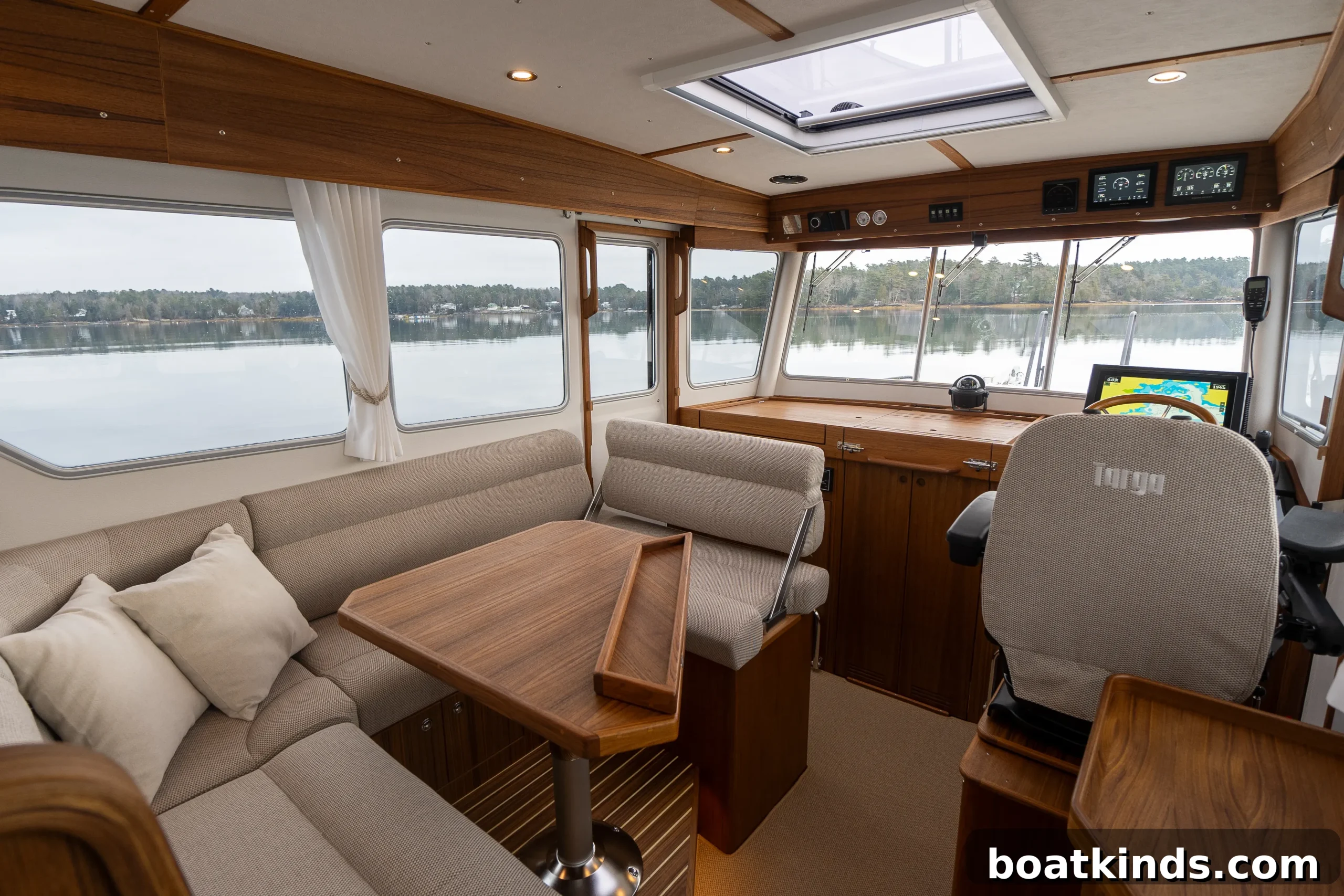
Many spaces on the 32 are designed for dual use. In the pilothouse, a broad teak surface forward of the port-side double seat provides room for paper charts, and beneath it hides a small galley with a sink and two propane burners. A refrigerator is concealed under the driver’s seat. The center section of the dash lifts on gas struts to reveal access down into the forward cabin, which includes a comfortable V-berth, multiple lockers and storage compartments.
I expected the head in the bow, but it was aft. Steps behind the U-shaped portside dinette lead down to a head and shower with adequate headroom for a 5’10” adult. The aft cabin offers two more berths: a twin bunk that will suit many adults or children, and a more spacious double bunk I preferred. Targa provides several optional bed layouts, so owners can choose what best fits their needs.
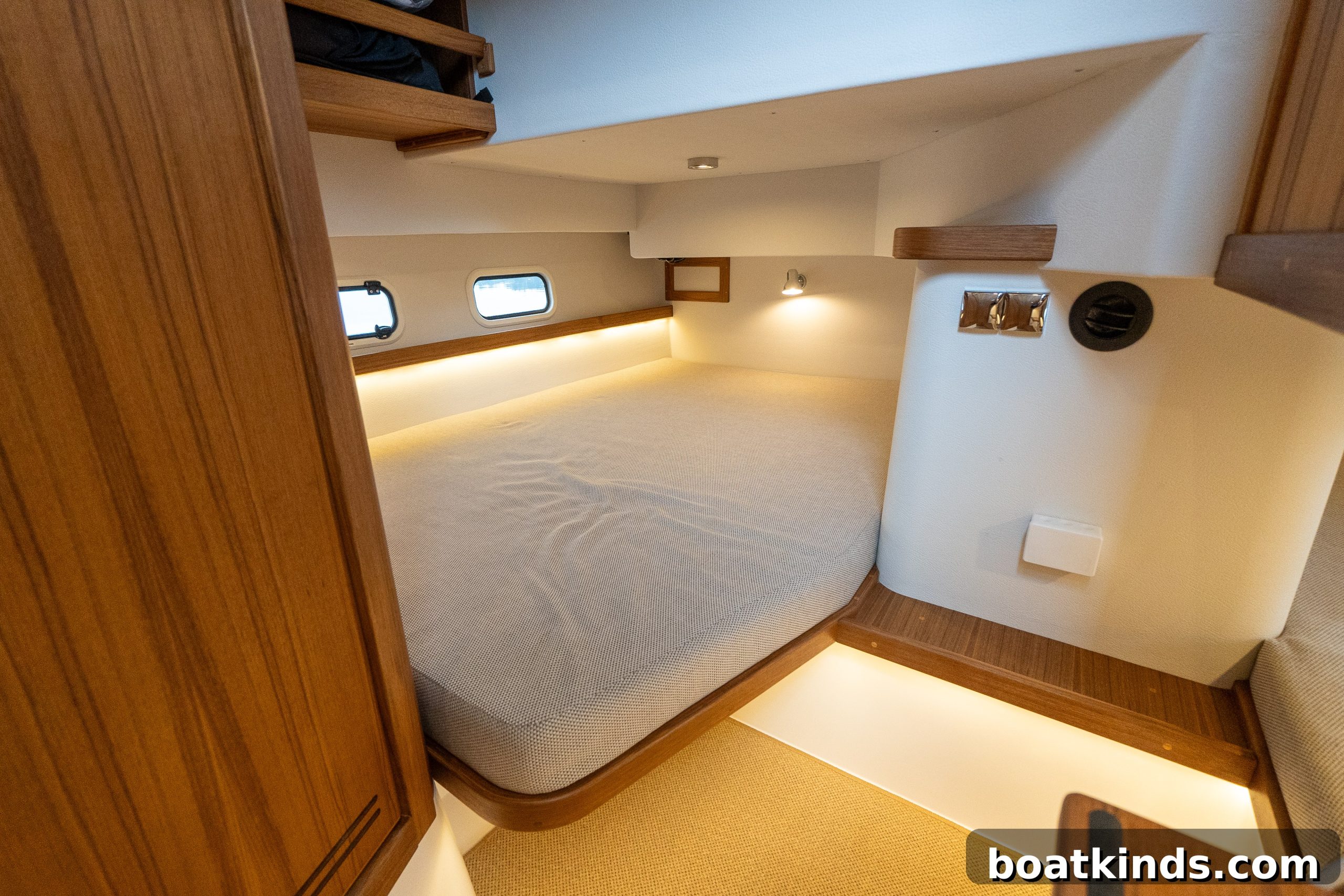
Inside, vertically grained teak created a modern, attractive interior without feeling heavy or oppressive. The balance of wood and white surfaces was well judged. Doors and drawer fronts are trimmed with strips of solid teak rather than thin veneers, resisting chipping over time. Most joinery felt first-class, though the drawers were screwed together rather than dovetailed—an odd exception in an otherwise premium fit-and-finish package.
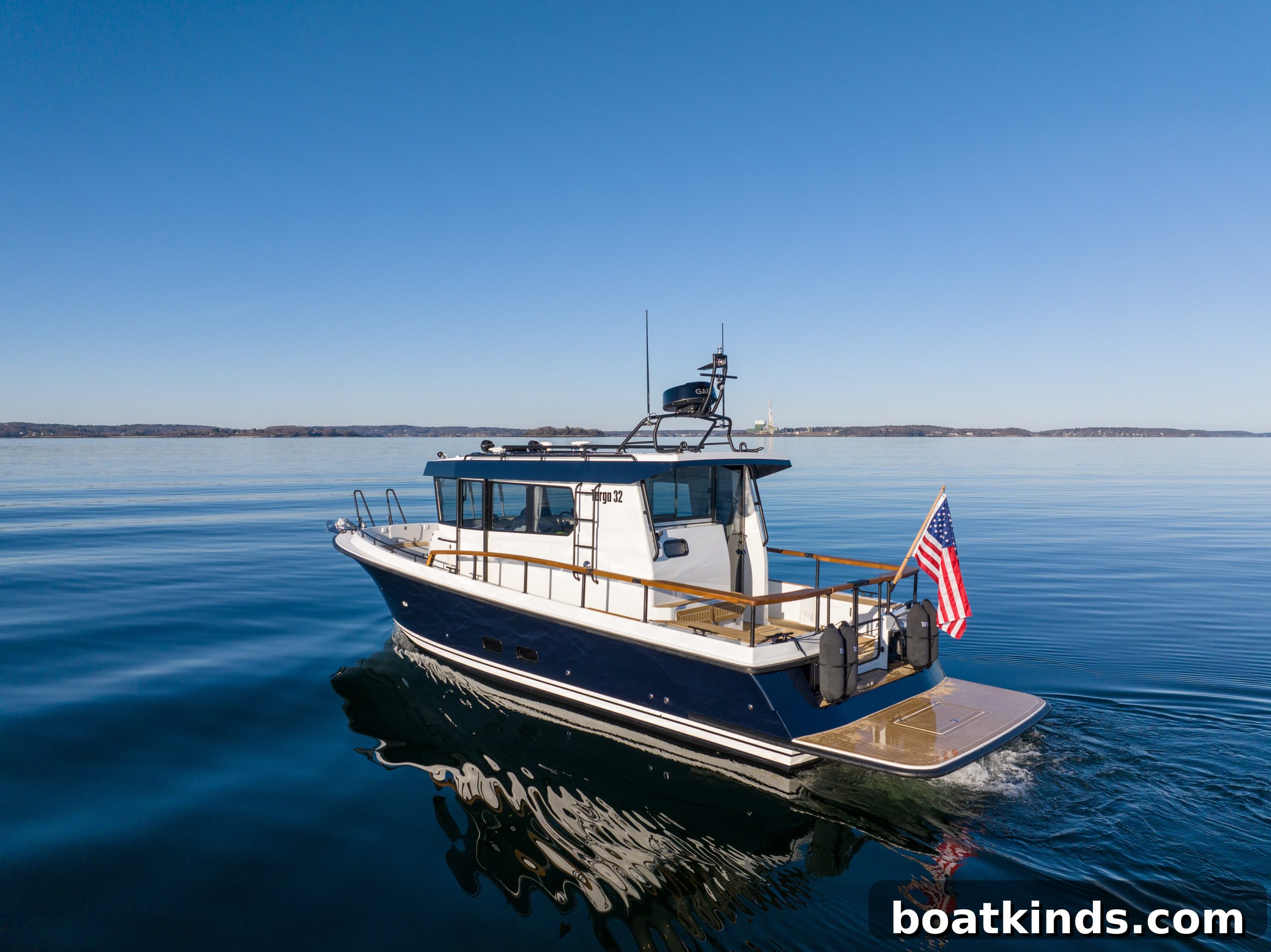
Above deck, Flexiteak flooring was convincing at a glance. The bow accommodates a double forward-facing seat and generous wraparound seating and stowage. The optional 15-pound stainless DTX anchor operates via a wireless remote. Tall gunwales with ample handholds make forward and aft movement secure and confidence-inspiring.
The cockpit includes fixed seating and stowage port and starboard, and a refrigerated locker with a thermostat to chill drinks or preserve a catch. Aft-facing pilothouse seats can be raised to create a roomy cockpit dining area for six or more with a table mounted in place. A transom anchor winch is a useful addition for cruising and anchor handling.
Access below the cockpit revealed tidy, well-labeled wiring and laminated diagrams mounted inside panel covers. The swim platform has a hatch above the outdrives for easy inspection or clearing of the running gear—attention to practical, owner-focused details.
Although Knowles sells outboard-powered Axopars and appreciates their appeal for day-use boaters, he specified inboards for the Targa 32 because he envisions it as a true explorer for longer runs. Diesel engines offer greater range and fuel efficiency, and the ability to run a diesel cabin heater makes it possible to extend the season and operate comfortably in colder weather. The electric heater in the engine room lets owners avoid nightly winterization when plugged into shore power, allowing engines to remain warm and ready.
Coming off the dock was easy, helped by the optional Volvo Penta Dynamic Positioning System holding the boat while Knowles used the joystick at the optional aft docking station. That aft station is an excellent feature when handling the boat single-handed.
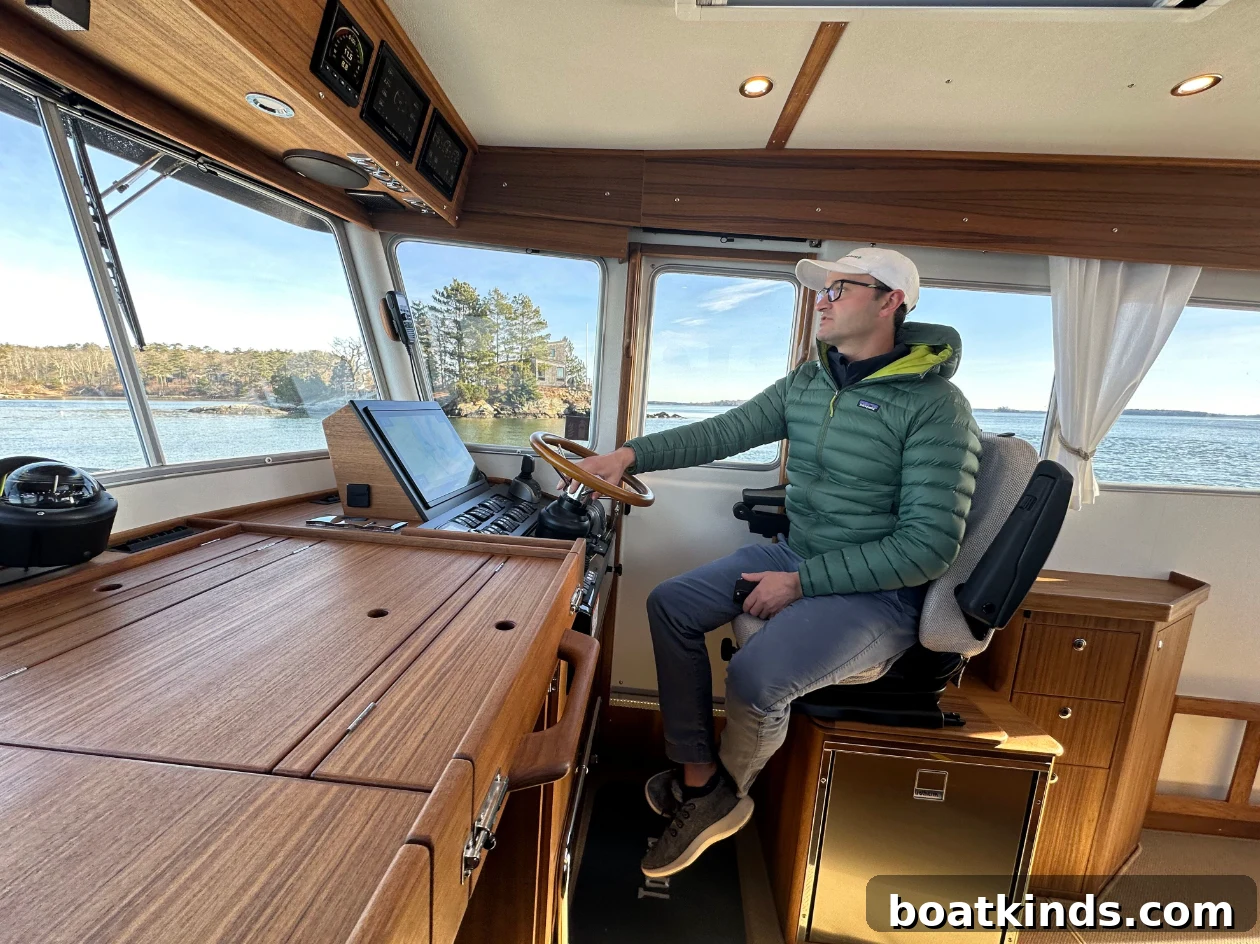
Visibility through the cabin is excellent—unrestricted sightlines make maneuvering straightforward. The inside helm is well laid out without clutter: a single large Garmin MFD sits above the wheel, digital gauges are logically placed, and all controls fall naturally to hand. The varnished wooden wheel provided an excellent grip as we pushed the throttles and accelerated toward Casco Bay.
At wide-open throttle the Targa reached 43 knots. In the bay’s 1- to 2-foot seas the boat produced little wake and handled passing wakes and an inbound lobster boat’s wash with calm confidence—no rattling of the standard dinnerware.
With glare from the sun on the water, Knowles lowered sun curtains as we closed on Halfway Rock Lighthouse. He launched his drone for photos while I ran the boat in planing mode, making multiple passes. The track on the multi-function display looked playful—many wiggles where we enjoyed pushing the boat hard in safe conditions.
Before returning to Freeport via Peaks Island, Knowles encouraged me to try the Grammer Avento Premium helm seat. Fitted with headrest, armrests and integrated remote controls for the electronics, it proved extremely comfortable. The seat adjusts and the helm console pivots for an ideal driving position, so we cruised back to Portland at 30 knots under bright blue skies.
Although we didn’t get the rough winter conditions that inspired Targa’s design, the 32 showed itself to be a sturdy, well-built walkaround that blends thoughtful interior accommodations with practical systems and solid offshore capability. It’s easy to see why buyers seeking extended-season adventure boats are drawn to this Finnish-built model.
LOA: 35’4”
Beam: 11’1”
Draft: 3’6”
Weight: 13,890 lbs.
Fuel: 211 gals.
Water: 40 gals.
Power (as tested): (2) 380-hp Volvo Penta D6
This story was originally published in the March 2024 Issue.