
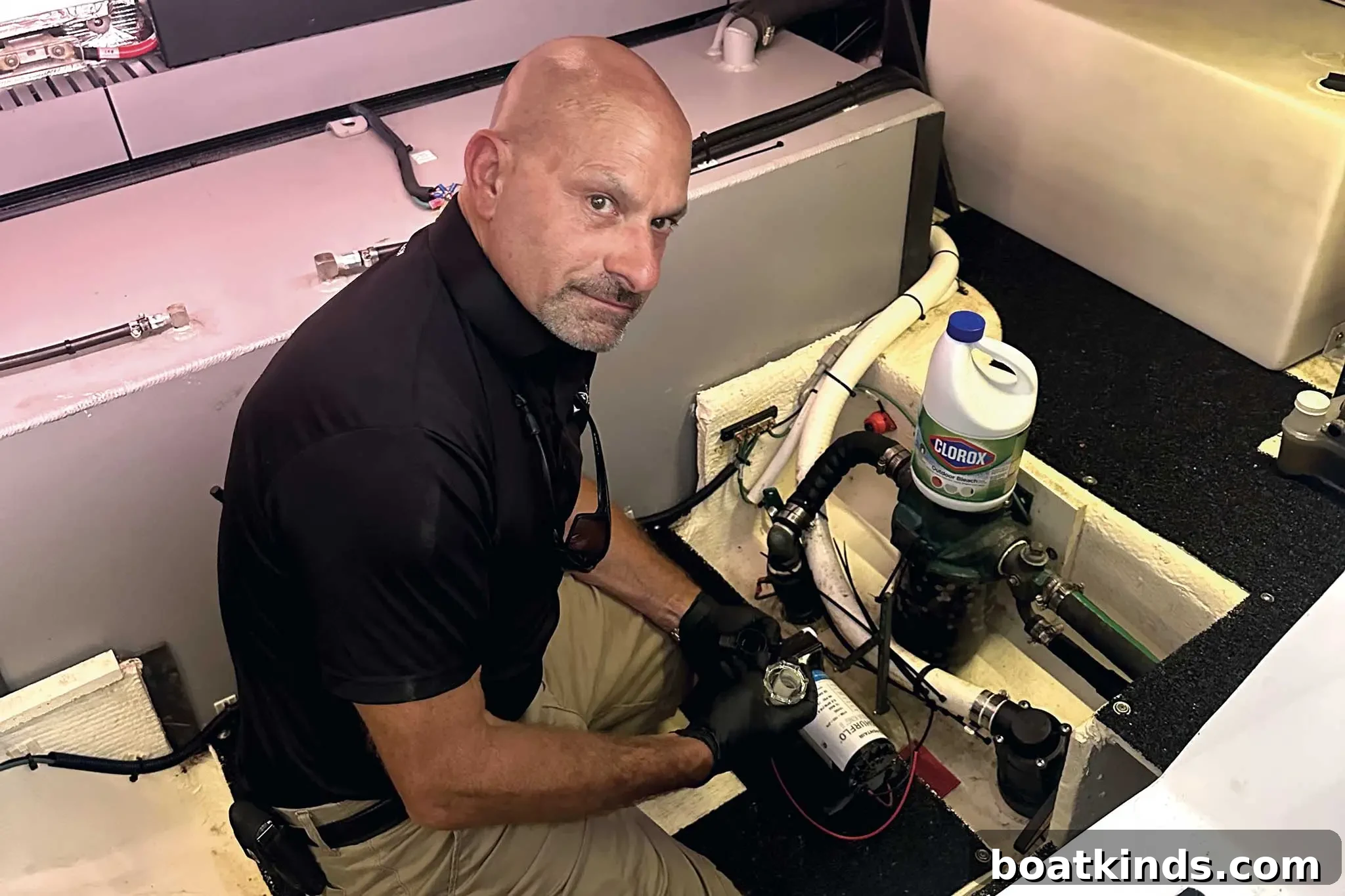
“We have had three customers in the past two weeks complaining about bad fresh water, or their freshwater pumps not working,” said Bob Petzold, president of Petzold’s Marine Center in Portland, Connecticut. By late June, the early heat of a New England summer was already stressing boat freshwater systems. Warm temperatures accelerate bacterial growth, turning once-clear water into a slimy, foul-smelling problem that can clog filters and damage pumps.
Many boaters blame algae when water goes sour, but algae needs light to grow. Bacteria do not. They thrive in dark, stagnant water and form a sticky coating called biofilm that clings to tank walls, hoses, and fittings. Biofilm shields bacteria from disinfectants and eventually restricts flow by clogging filters and pumps. “Once a tank is contaminated, it is difficult to clean,” Petzold warned.
The simplest and most effective strategy is to prevent water from standing unused in the tank. Municipal water supplies typically contain a small residual of chlorine—often around 3 to 4 parts per million (ppm)—which keeps water tasting fresh from the tap. That residual disappears when water is stored and left unused. In a clean tank under cool conditions, chlorine may linger for weeks; in warm weather or in a tank with contamination, it may be gone in a few days. Use chlorine test strips to monitor residual levels; they are inexpensive and also useful when sanitizing the system.
Avoid filling the freshwater tank until you need the water. For short day trips, add only a few gallons and run the faucets to use that supply before leaving the boat for a day or longer. When you’re cruising and consuming more water, top up then. Frequent use keeps the system flushed and reduces the chance for bacteria to take hold.
Petzold recommends relying on the water stored in the tank rather than the dockside connection, because the shore supply bypasses the tank and doesn’t keep its water fresh. One commonly overlooked contamination source is the dockside hose: after use it is often left with water inside, hung up for days, and that standing water can become a breeding ground. Use a hose certified for drinking water to fill tanks, drain it after use, and stow it below deck. Reserve older hoses for washdowns to avoid introducing new organisms into your potable system.
Hit ’Em With Clorox
When water begins to taste or smell bad—the first sign of bacterial contamination—it’s time to sanitize the tank and plumbing. Sanitizing won’t remove every trace of existing biofilm, but it will kill the active microorganisms. The most straightforward method is to drain the system and flush it with a chlorine solution or a commercial sanitizer. Household bleach is an economical option. A practical sanitizing concentration is about 100 ppm of chlorine. That equates to roughly four ounces of standard Clorox (7.5 percent sodium hypochlorite) mixed into 25 gallons of water; adjust the bleach amount if you use a different strength product. Note that 100 ppm is much higher than drinking-water limits and should not be consumed while in the system.
You don’t need to be mathematically perfect, but don’t be careless: adding more bleach won’t improve effectiveness once bacteria are killed and may cause corrosion. Open all faucets, including the icemaker line if present, until the chlorine solution flows throughout the system and you see it at every outlet. Leave the treated solution in the system for a period between one and 24 hours. The American Boat and Yacht Council (ABYC) suggests one hour; experienced technicians like Petzold often recommend 24 hours for tougher contamination. Avoid leaving a 100-ppm solution in place for more than 24 hours, as some components can be damaged.
To improve contact with surfaces, agitate the treated water—take the boat for a short run if possible. Then pump the sanitizing solution out and flush the entire system thoroughly with fresh water. Clean inlet and faucet screens, which may trap dislodged debris, and clear the tank vent, ensuring its screen is intact to keep insects and dirt out. If the unpleasant taste persists after sanitizing, suspect the hoses; they can harbor biofilm and may need replacement.
For ongoing maintenance, some boat owners keep a low residual chlorine level in the tank to deter bacterial regrowth. Aim for about 0.5 ppm for routine protection—roughly 1/8 teaspoon of Clorox per 25 gallons mixed into a jug of water and poured into the tank so the bleach does not cling to the fill pipe. Run the system briefly or wait an hour, then check the residual with a test strip. Levels up to 4 ppm are generally considered safe to drink, though they may produce a noticeable bleach odor; chlorine residuals will decline faster in warm weather.
Bacteria are everywhere and will recolonize a freshly sanitized system over time. The key is regular use, periodic testing, and timely sanitizing to keep biofilm and bacterial levels low. With routine care—fresh water use, a dedicated potable hose, and scheduled sanitizing—you can avoid unpleasant tastes and pump problems even during hot summer months.