
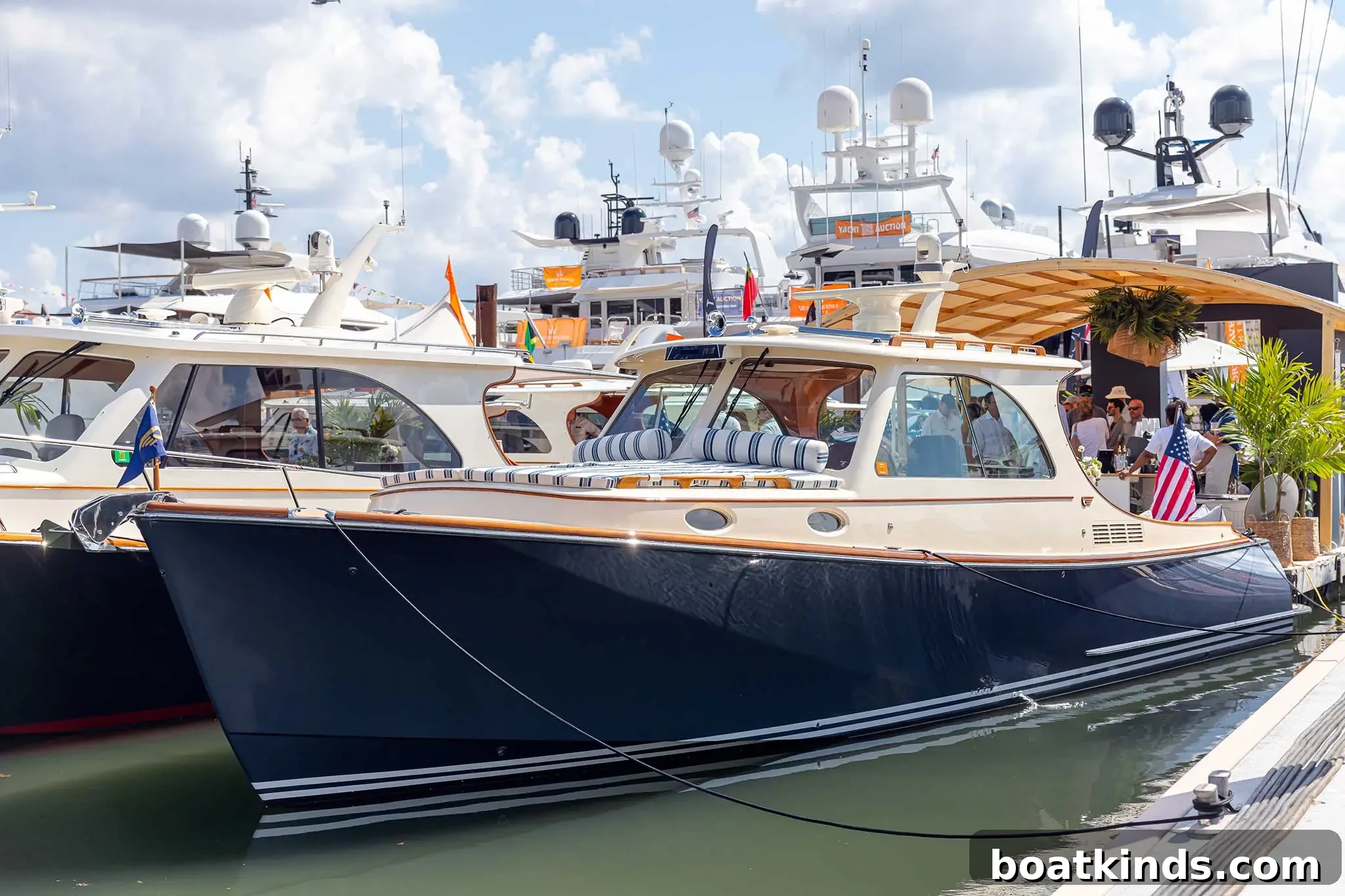
Most vintage Hinckley yachts are cared for meticulously, but Picnic Boat hull No. 006—built in 2010—was an exception. Neglect and subsequent storm damage left the boat in poor condition. To demonstrate the depth of its refit capabilities, Hinckley repurchased the vessel, renamed it Bellerophon after the mythic Greek hero, and committed to a comprehensive restoration at its service facilities.
After replacing or upgrading nearly every system with modern components and materials, Hinckley debuted the restored Picnic Boat 37 on the show circuit last spring. Priced at $1.2 million, the refit attracted strong interest from buyers and showcased the yard’s ability to take a neglected hull and return it to premium condition.
Henry R. Hinckley founded the Hinckley Company in Southwest Harbor, Maine, in 1928 and prioritized service from the start. Before building his first boat, Ruthyeolyn, a 36-foot fisherman launched in 1933, he focused on maintaining local lobster boats and the yachts of summer residents on Mount Desert Island. Frustrated by the limitations of off-the-shelf hardware, Hinckley—who studied aeronautical and mechanical engineering at Cornell—began producing his own fittings, including stanchions, chocks, pulpits and masts.
Over the decades the yard earned a reputation for fine sailboats. “He built a variety of private and commercial powerboats, but it was mostly custom and semicustom sailboats,” says Scott Bryant, Hinckley’s vice president of marketing. The company shifted its focus in 1994 with the introduction of the Picnic Boat 36 and a move toward powerboats powered by waterjets.
Bryant emphasizes that service has always been central to Hinckley’s approach: “When Henry Hinckley started building boats, he was servicing them too. He appreciated the full life cycle of a vessel—good service is essential to a successful business.”
That service-first mentality now extends across a network of yards along the East Coast. “We began building a network of service locations beyond Southwest Harbor in the late 1990s,” Bryant explains. “Today that reputation extends far beyond Maine, reflected in the craftsmanship our service teams deliver. We operate 11 yards from Maine to Florida that can service premium boats, including Hinckleys.”
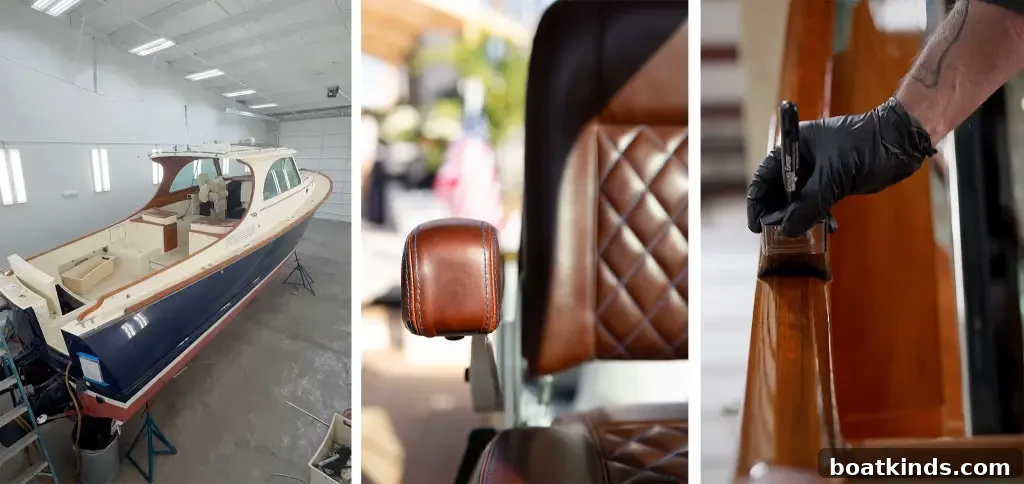
To highlight those refit capabilities—including work at the newly added Port of Egypt Marina on Long Island’s North Fork—Hinckley chose Picnic Boat 006 for a full resurrection. “Bellerophon is a rare case of a Hinckley that had fallen out of care,” Bryant says. “Our owners are typically stewards of their boats; many fiberglass models built since the 1950s remain in service because owners treat them as heirlooms. When we discovered 006 had been neglected, we bought it from an owner who could no longer maintain it, brought it to our Portsmouth, Rhode Island yard and stripped it down to the bones. We rebuilt and repowered the boat and installed some very interesting technology.”
The overhaul began in the fall of 2025 and finished in spring 2026. Up to 15 technicians worked on the project, contributing roughly 2,500 labor hours to the refit.
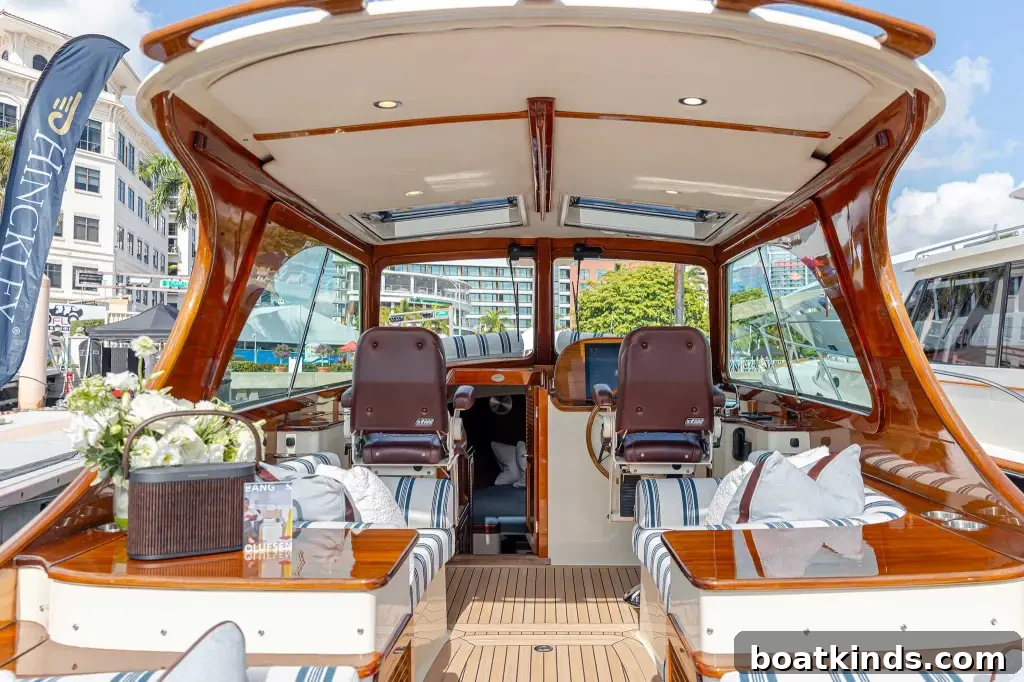
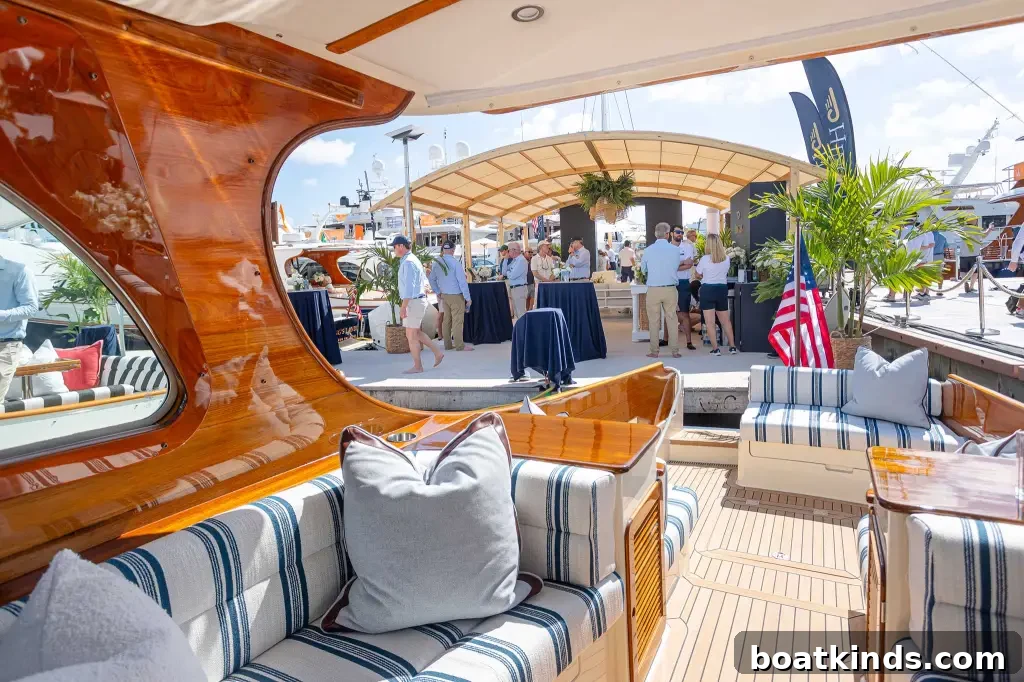
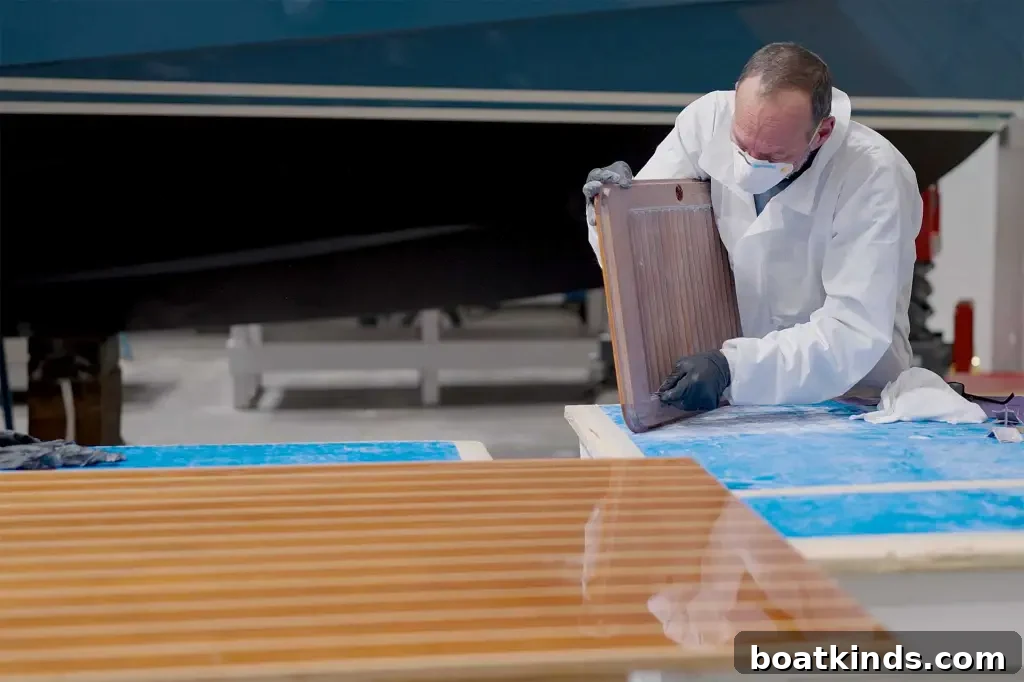
Cosmetically, the original Flag Blue hull received a fresh coat of Awlgrip Steel Blue Metallic paint with a Whisper Grey boot stripe for a cleaner, more contemporary profile. The deck now features synthetic Permateek, which reproduces the look of traditional teak without the maintenance burden. Brightwork was renewed with fresh varnish applied to the wheelhouse veneer, capping rails and coamings, and a bow sunpad was added to increase guest lounging space.
Underway upgrades were substantial. The original Volvo Penta D4 300-hp diesels were replaced by twin Volvo Penta D6 480-hp engines, which required a complete re-engineering of the engine room while retaining the original Hamilton waterjets. The new propulsion elevates top speed from the low-30-knot range to around 40 knots.
Inside, Tack Studios of Maine collaborated on a contemporary interior. Outdated pedestal seating was removed in favor of electric Stidd helm seats reupholstered in-house with premium leather. The helm now integrates advanced electronics: a Raymarine Axiom2 XL 24-inch main display in a custom pod, two Axiom2 Pro 12-inch displays for navigation, and a 16-inch Raymarine unit in a matching port-side pod. All systems—from the Bang & Olufsen audio to climate control—are managed through Raymarine’s YachtSense digital switching and control system.
Advanced control and safety systems elevate the refit’s technical scope. Hinckley’s JetStick 4 includes Dockhold, which holds the boat against a dock while the skipper attends lines, and Heading Hold to maintain course. An Avikus system supplies a full 360-degree situational view for docking and obstacle avoidance. The navigation suite integrates a FLIR M364C thermal camera with Raymarine Cyclone radar, augmented-reality navigation, experimental hidden lidar and RMV-400 sounding hardware paired with an RMV-1600 processor for enhanced depth sensing and 3D live seabed mapping.
Support systems were modernized as well: a lithium battery bank supplies on-board AC power without a generator, and connectivity is improved with Starlink plus low-profile solar panels from Solbian.
Hinckley says the restoration honors Henry Hinckley’s philosophy: build strong, seaworthy hulls and service them properly. “For Hinckley, the only acceptable way is the right way,” Bryant notes. “That may not always be the easiest or most economical choice, whether you’re building new or refitting an existing boat.”
This article originally appeared in the September 2026 issue.