
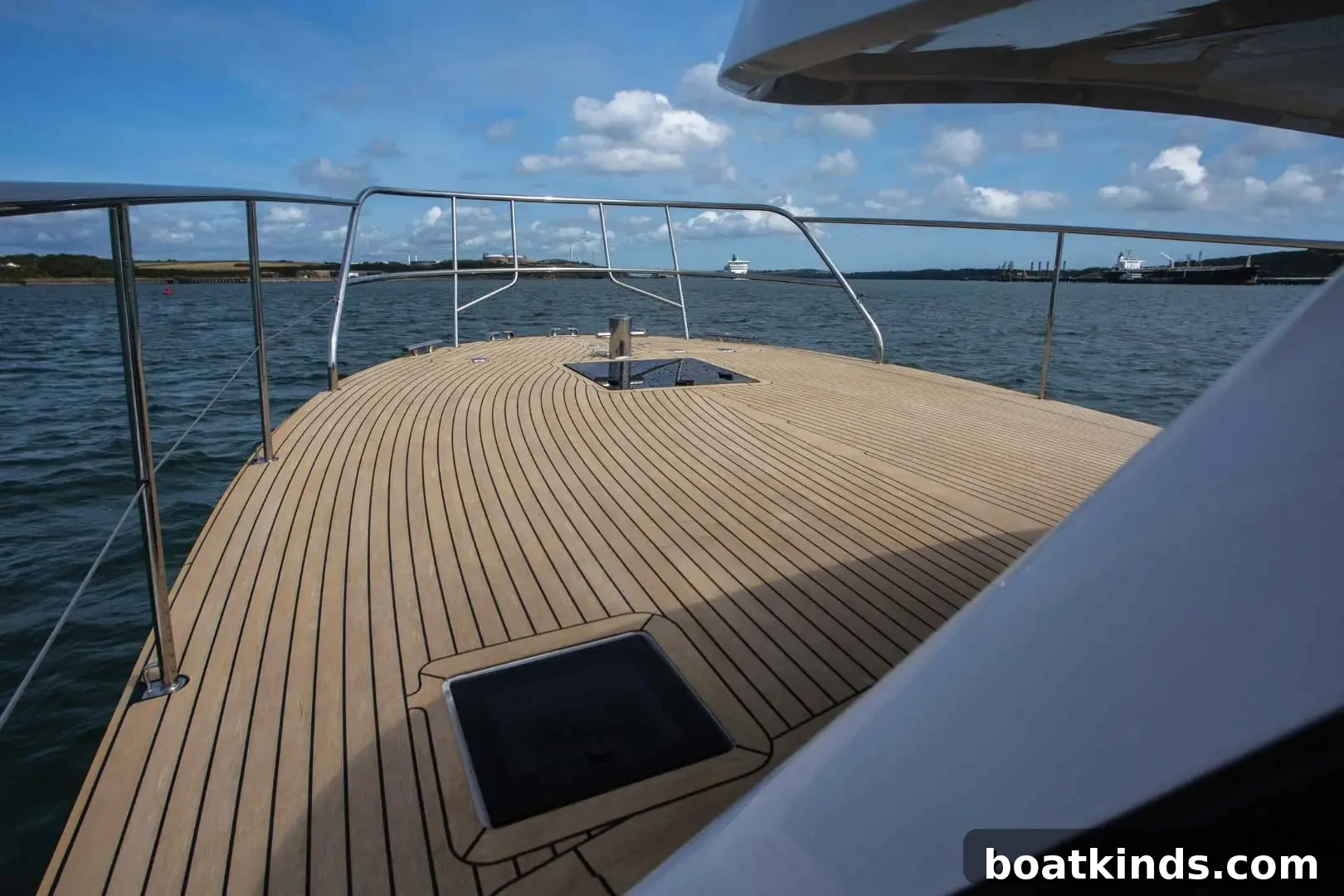
Natural teak has long been the default decking choice for premium yachts and superyachts, but the market is changing. Supply-chain disruptions, rising costs, sustainability concerns and the arrival of high-performance alternatives are expanding how owners, designers and builders think about yacht decking.
“Every vessel, every owner and every project has different priorities,” says Richard Strauss, CEO of Teakdecking Systems in Sarasota, Florida. “Some clients are focused on authenticity and tradition, while others prioritize sustainability, reduced maintenance, heat reduction or long-term durability. Our role is to provide the right solution for the application.”
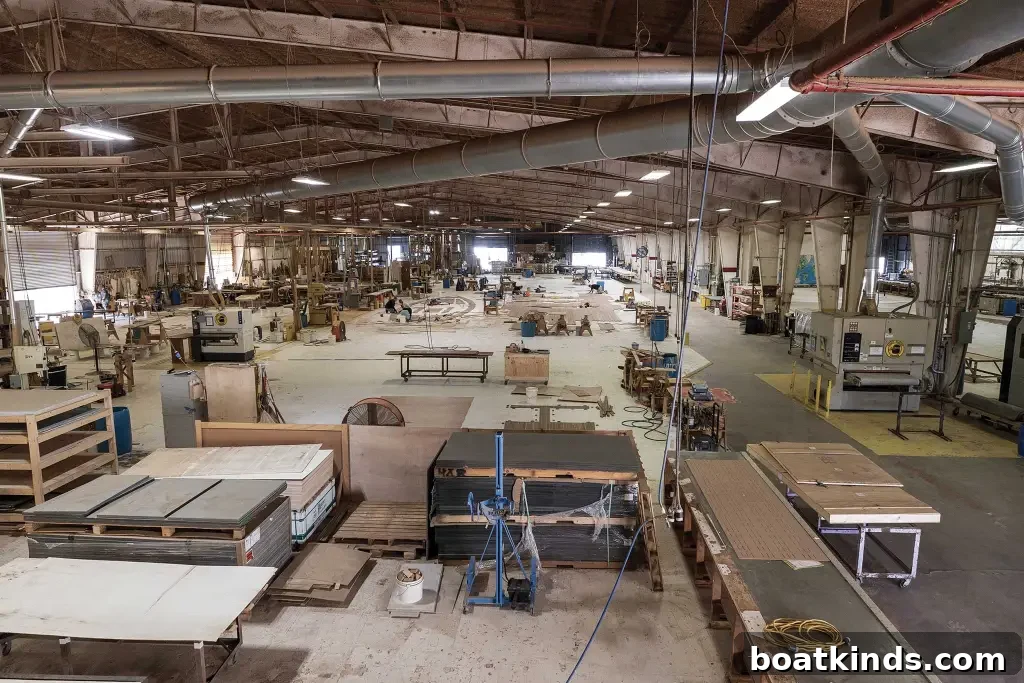
The supply picture for teak has shifted significantly in recent years. Sanctions on Myanmar — historically a major source of high-grade teak — combined with tighter global supply chains and increasing scrutiny of sourcing practices have pushed manufacturers to adapt. Teakdecking Systems has responded by tightening sourcing oversight and diversifying its product range, including adopting laminated teak made from plantation-grown trees.
“At the ultra-high end of the superyacht market, teak remains the default for the most part,” Strauss says. “We are seeing movement toward laminated teak—still teak, but produced from 30-year-old plantation trees that don’t yield the vertical-grain timber found in classic decking. The laminated product we use—Green Teak from Thailand—is sliced into veneers, then glued and pressed in a proprietary process to produce a vertical-grain appearance that is very stable and retains the key characteristics of traditional vertical-grain teak.”
However, non-teak decking is appearing on larger yachts too: Strauss points to vessels such as the 361-foot Oceanco Leviathan, launched with composite decking, as evidence that composites and other alternatives are no longer limited to production boats. “Composite is becoming a consideration,” he adds, “but the mainstream still favors teak in some variant.”
About 20 percent of Teakdecking Systems’ projects now use alternative materials, including composites and cork-based systems. Builders and shipyards increasingly look for decking solutions that reduce maintenance, lower life-cycle costs and meet sustainability goals. Many owners are asking for alternatives early in the design process, even among traditionally conservative buyers who once insisted on natural teak.
Synthetics on Deck
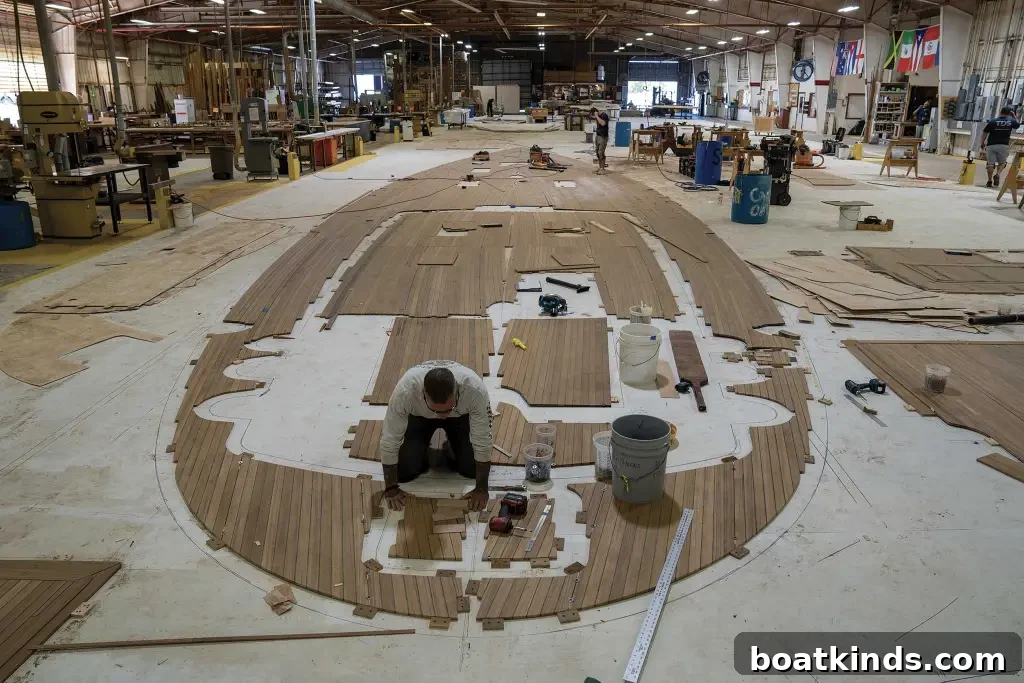
One company pushing synthetic decking as a viable alternative is Sweden-based Flexiteek, which opened a U.S. base in Florida recently and now supplies more than 200 boatbuilders worldwide. Chad Adams, Managing Director of Flexiteek America, says the market is shifting steadily rather than flipping overnight.
In November 2024, Flexiteek introduced Flexiteek 3, a third-generation product built with a bio-attributed PVC that replaces a portion of fossil-based plastics with tall oil sourced from sustainably managed timber in the U.S. and Europe. According to Adams, this formulation reduces greenhouse gas emissions by more than 80% compared with conventional PVC formulations, making it especially appealing to European OEMs focused on lower emissions and sustainability.
Flexiteek also launched Tritone in 2025, described as the first continuous changing-grain synthetic teak. Using a proprietary manufacturing method to vary color tone within individual planks, Tritone is offered in three styles—teak, scrubbed and ash—and aims to win over teak traditionalists who have long criticized synthetic products for looking too uniform.
Durability, UV stability and easier cleaning are central to the synthetic value proposition. “Boat owners tell us they want to spend less time maintaining teak,” Adams says. “Flexiteek 3 significantly reduces the time required to keep a deck looking like new, and that is proving to be a game-changer for many owners.” He notes one remaining disadvantage: heat underfoot. Flexiteek 3 lowers surface temperature compared with earlier generations, but natural teak and cork-based decks still have an advantage on this metric.
Flexiteek is also expanding its manufacturing and service footprint. In May the company acquired its Danish distributor and added a fourth fabrication hub, strengthening its ability to produce, fabricate and install decking worldwide and offer end-to-end services to OEMs and boat owners.
Cork Makes Its Case
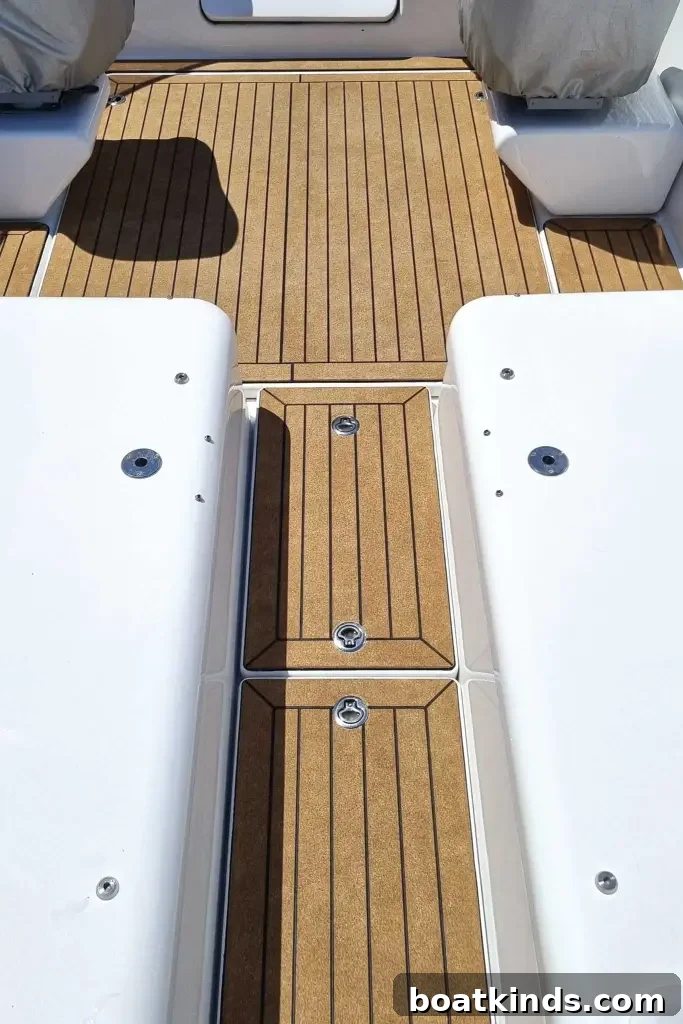
Amorim Cork Solutions of Portugal, which operates in the U.S. from a base in Trevor, Wisconsin, is promoting cork as a complete decking system under the marine brand Navicork. The company is positioning cork not as a niche novelty but as an engineered, scalable alternative for marine decking.
Amorim has supplied cork granules and sheets to other decking manufacturers for years, but the business has often been reactive. Udo Kleinitz, Business Development Director for marine at Amorim Cork Solutions, says OEMs are increasingly approaching the company because of cork’s sustainability credentials and its performance in the field.
Cork is harvested from the bark of cork oak trees without felling them; a tree can be stripped every nine years for more than a century. The harvested material actively sequesters carbon, which contributes to cork’s environmental appeal. Kleinitz emphasizes that cork’s market traction depends not only on sustainability but on commercial viability: “Performance, price, installation efficiency and production fit are still decisive factors.”
Amorim’s FD01 remains its premium, most natural cork decking product, prized for low surface temperature, tactile comfort and strong carbon performance. The newer FD02 is designed as a more cost-effective, scalable option. FD02 is a peel-and-stick system that leverages Amorim’s automotive industry experience and competes more directly with EVA foam decking in terms of installation simplicity and price point.
Treading Slowly
All three companies emphasize that material change in the marine industry requires patience. New decking products must win acceptance from a long chain of stakeholders—owners, designers, engineers, shipyards and skilled craftsmen who install decking by hand. Familiarity and proven performance matter as much as technical specifications.
“The biggest barrier is not technical performance. It is familiarity,” Kleinitz says. Cork must overcome an outdated perception that ties it to pinboards and wine stoppers rather than seeing it as an engineered material used in automotive and aerospace applications. Education, testing and visible installations are critical to shifting that perception.
Navicork’s strategy focuses on three pillars: producing rigorous test data to validate performance, reframing cork as an engineered material rather than a novelty, and building a visible track record of successful installations. “Nothing builds confidence like seeing successful applications in the market,” Kleinitz notes.
For Flexiteek, a long history of installations and established relationships with more than 200 boatbuilders provide credibility. “It’s taken us 26 years to build this level of relationship and trust,” Adams says. That track record helps convince yards and owners to consider synthetic options.
Looking ahead, industry experts expect natural teak to remain dominant in the superyacht sector and among owners who value authenticity. Synthetics are likely to expand in production boatbuilding and with owners seeking lower maintenance. Cork is expected to grow among sustainability-conscious OEMs and buyers who want a natural, comfortable material with strong environmental credentials.
“The future is not one material replacing another,” Strauss says. “It’s about giving clients more choices than before.” Kleinitz predicts cork composites will occupy a stronger and more visible market position within five years as builders, yards and owners seek a better balance of comfort, sustainability, performance and process efficiency.
For now, teak still reigns as the quintessential decking material, even as the market diversifies and new decking technologies gain traction. —David Conway