
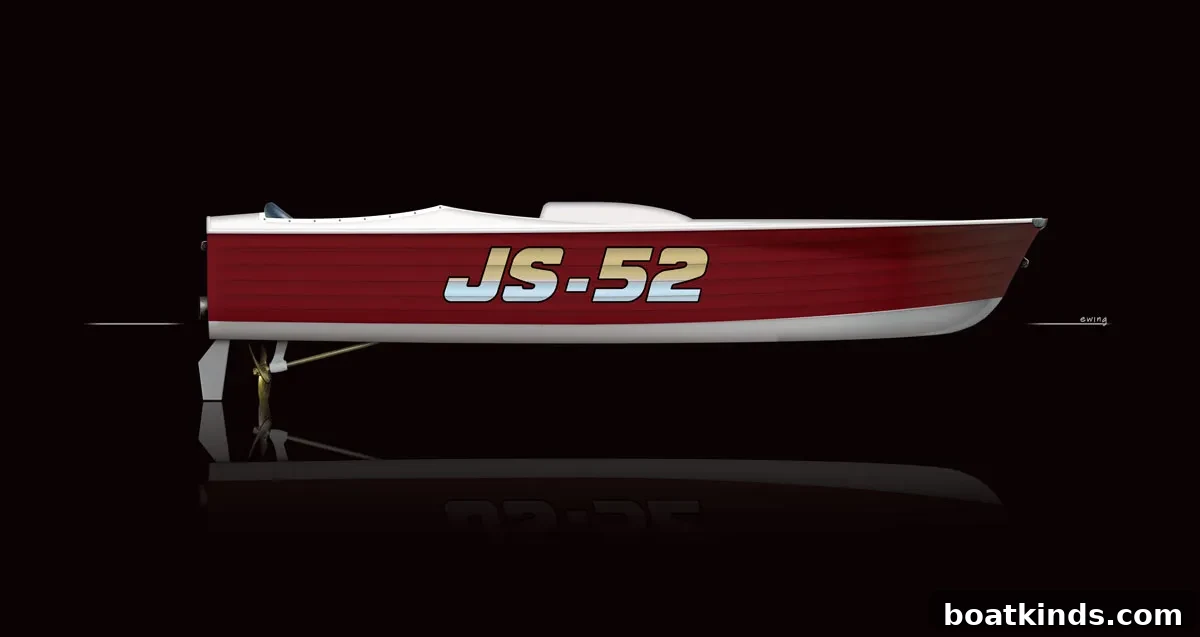
The Jersey Speed Skiff: New Jersey’s Compact Speedboat Legend
Compact, nimble, and surprisingly powerful for its size, the Jersey Speed Skiff has earned a reputation as a true speedboat classic. Built along the New Jersey coast, this small runabout combines a long regional history with an active present-day racing scene. At roughly 16 feet in length, some of these inboard-powered boats can reach speeds that approach 70 knots, making them striking examples of efficient hull design and mechanical tuning.
The Jersey Speed Skiff grew out of a practical working boat that preceded it: the clinker-built Jersey skiff used for sailing and rowing. That earlier skiff featured a flat bottom designed for easy beach launching and retrieval, high sides to handle breaking surf, and a wine-glass-style transom that helped the hull punch through waves. Two related regional designs, the Sea Bright skiff and the Southern Shore skiff, shared similarities but differed in construction details and intended use.
According to historian Ned Lloyd, the first powered version of what became known as the Jersey Speed Skiff was likely built in Oceanport around 1922 by Harold “Pappy” Seaman. Commissioned as a pleasure boat for Red Bank boater J.P. Bowers, the original was a 16-foot craft with a flat, skeg-less bottom and an inboard engine. Its compact size and distinctive hull made it especially quick and maneuverable for nearshore work, qualities that soon drew attention beyond the pleasure-boat community.
When Prohibition created demand for fast transfer boats, the Jersey Speed Skiff’s combination of speed, agility, and shallow draft proved well suited to the task. Off the Jersey shore, as many as 60 larger ships could sit in international waters waiting to transfer cargo, while smaller boats ran goods to the beach. The skiff’s performance made it a practical choice during those years, and that chapter of coastal history helped cement the craft’s legend.
Today the Jersey Speed Skiff is both a vintage coastal icon and a competitive racing class. The American Powerboat Association oversees an active racing circuit for the design, with specific rules that preserve the character of the boats while prioritizing modern safety. Races require a driver and a rider/lookout—a nod to the craft’s historic operational roles—and modern safety equipment such as harnesses and a roll cage is mandatory. Power is supplied by inboard engines in a defined displacement range, and typical racing speeds fall between roughly 65 and 73 knots depending on conditions and setup.
Beyond the racetrack, the Jersey Speed Skiff community includes restorers, builders, and enthusiasts who work to preserve original hull forms and mechanical layouts. Owners and clubs hold gatherings, demonstrations, and local events that celebrate the boat’s heritage and keep traditional skills alive—everything from clinker-chest maintenance to inboard engine tuning. Events such as New Jersey’s Thunder on the Shrewsbury bring skiffs from around the country, further sustaining interest in these compact, high-performance runabouts.
Maintaining a Jersey Speed Skiff requires particular attention to hull condition and engine reliability. The flat-bottom hulls are forgiving in shallow water but benefit from careful storage and regular maintenance to avoid rot, corrosion, or stress damage. Owners often invest in period-appropriate finishes and hardware to retain the boat’s historic appearance while integrating modern safety items required for competition and everyday use.
Whether admired as a slice of coastal history, campaigned on the race circuit, or kept as a cherished weekend runabout, the Jersey Speed Skiff remains a vivid example of regional boatbuilding ingenuity. Its blend of small-boat practicality and high-speed capability explains why it continues to attract attention from boaters, historians, and racers alike.
This article was originally published in the August 2021 issue.