
Mysterious Wave Glider Drone Washes Ashore on Remote Isle of Tiree
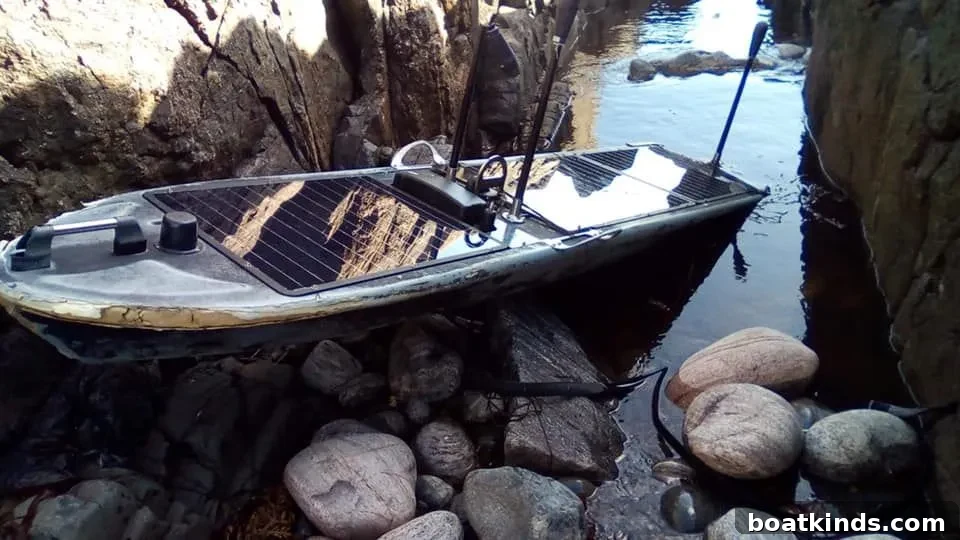
Beachgoers on the remote Scottish Isle of Tiree discovered an unexpected sight: an American-made autonomous marine drone lodged between two rocks on the shoreline. Tiree, a small island with a population of around 653, is one of the most westerly inhabited points in the Inner Hebrides, and finding a sophisticated piece of ocean technology on its beaches was surprising to locals and visitors alike.
Observers and experts who examined the craft identified it as a Liquid Robotics Wave Glider, a type of unmanned surface vehicle designed to travel long distances across the ocean while powered largely by wave motion and supplemented by solar energy. The beached hull displayed several characteristic features of the Wave Glider design: a prominent handle on the bow, three solar panels spread across its deck, and three antennas rising from the top—components that are typically used for satellite communications, payload telemetry, and GPS navigation.
Only part of the system was found on the beach. The Wave Glider is composed of a surface float and a subsurface glider module that converts wave energy into forward motion. In this case, the submarine unit—the submerged component responsible for capturing wave energy and driving the surface float—was missing, likely separated from the surface hull and lost at sea. Without the subunit, the surface hull is essentially a powerless, drifting object that can be carried by tides and wind for long distances.
Initial reports described the drone as mysterious and even suggested it might be a government spy craft, which sparked curiosity and concern among island residents. While some of those characterizations remain speculative, several practical explanations exist for how a Wave Glider could end up on a remote shore: a failed mission, a detached or damaged tether, rough weather, or a malfunction in the propulsion or communications systems could all lead to the craft breaking away from its intended course and drifting ashore.
No organization or owner has come forward to claim the device, and, according to local accounts, the hull was reportedly taken from the high tide line to a nearby resident’s property. Locals say it was moved away from prying eyes, which has further fueled curiosity but also reflects a common community impulse to secure unusual items found on remote beaches until authorities can be notified. The absence of identification or immediate claims of ownership raises questions about maritime recovery protocols for autonomous ocean platforms and how quickly responsible parties can be located when devices wash up in distant locations.
Wave Glider systems are commonly used by a range of users, from scientific research teams monitoring ocean conditions to commercial operators collecting environmental or infrastructure data. They can also be configured for longer-term missions involving ocean observation, marine mammal monitoring, or coastal surveillance. Given that these vehicles are built to operate autonomously and travel thousands of miles, it is not unheard of for them to lose contact with their operators and drift into unfamiliar waters.
The discovery on Tiree underscores several broader issues connected to increasingly autonomous maritime technology: the difficulty of tracing ownership when craft lose communications, the potential environmental risks of debris from damaged systems washing ashore, and the legal and practical responsibilities for reporting and handling such finds. For residents of small islands like Tiree, encountering advanced ocean technology is a reminder of how interconnected even the most remote places are with global maritime traffic and research efforts.
Authorities or the manufacturer may eventually be able to identify the hull through serial numbers or distinctive markings, but until the missing submarine unit is recovered or the owning party steps forward, uncertainty will remain. In the meantime, the beached Wave Glider offers a tangible example of how autonomous ocean devices can travel far from their launch points, sometimes arriving unexpectedly on the shores of distant communities.