
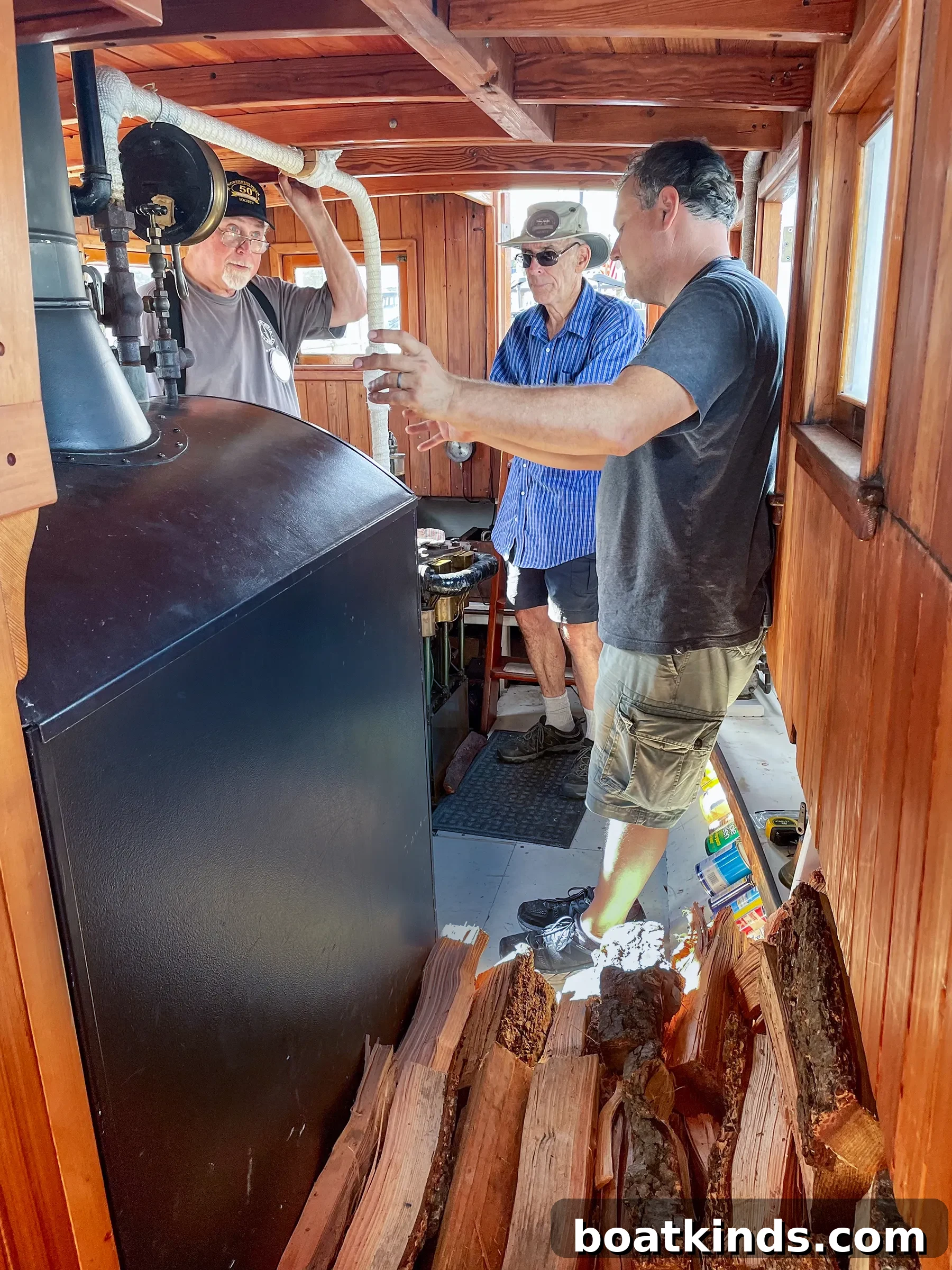
To a newcomer, the moment steam from the wood-fired boiler reaches Dodo’s engine is an audiovisual marvel. As owner Paul Hylton methodically opens valves and pulls levers, the boiler room fills with creaks, moans and steady hisses while the US Navy Type K 1918 two-cylinder engine comes to life. The initial clatter quickly settles into a rhythmic purr, like a giant sewing machine, with rods, pistons, linkages, bearings and the crankshaft all working in plain sight.
That start-up ritual was once the core experience of the steamboats and the Mosquito Fleet that dominated Puget Sound transportation for roughly a century, until roads, trucks and private cars made many of them obsolete by the 1930s. Today the Northwest Steam Society (NWSS) keeps that tradition alive; the society recently gathered for its 50th anniversary meeting in Blaine, Washington.
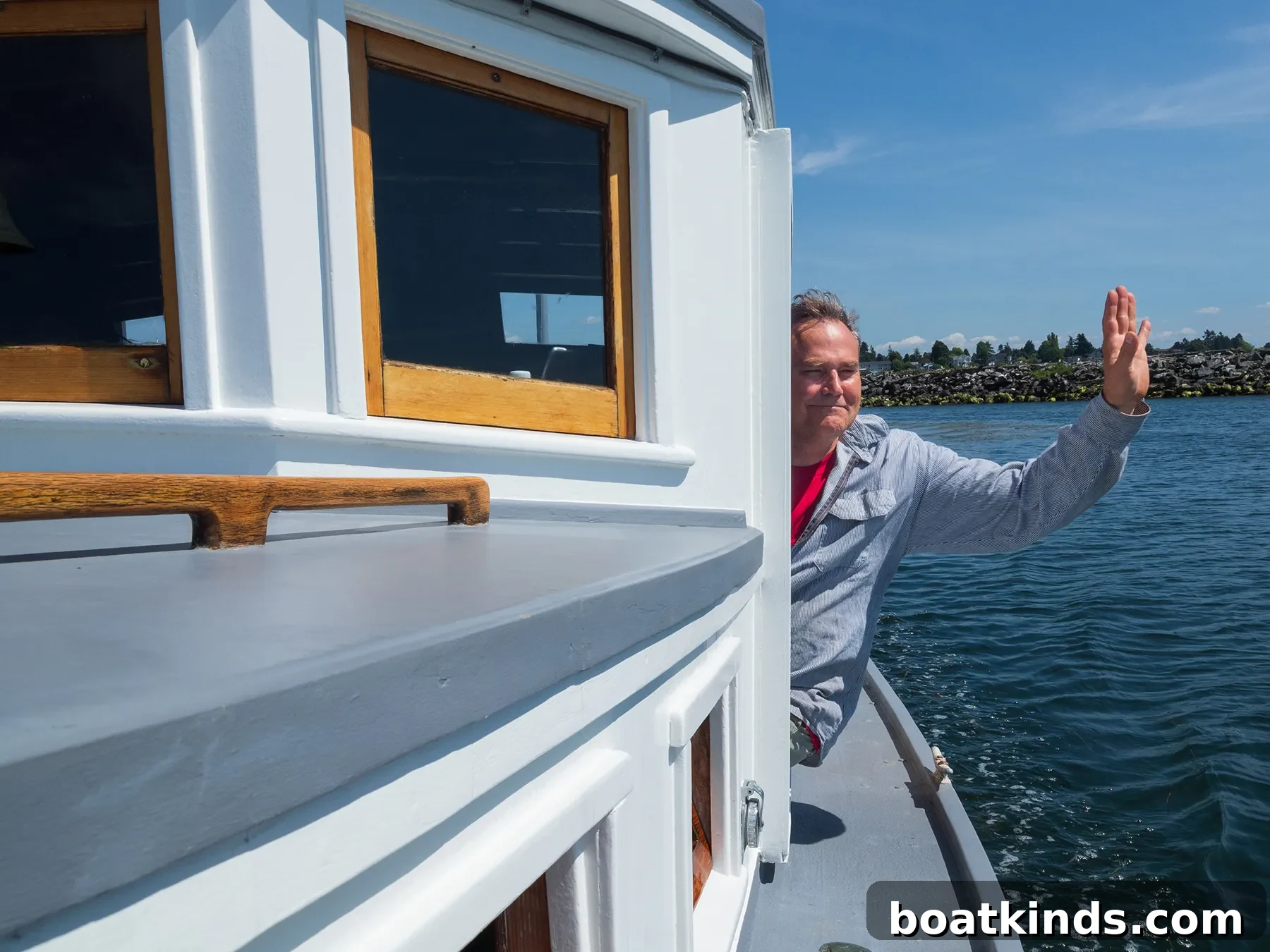
“People forget that aircraft carriers are also a kind of steamboat, except their boilers are nuclear,” Hylton said while checking Dodo’s steam pressure. “We run reciprocating steam engines. It’s antiquated but much more engaging — and people love watching it.”
Those whistles and the visible machinery are the result of a straightforward thermodynamic process: steam from an external boiler expands and is routed through an insulated line to the engine. That expansion pushes pistons, turns the crankshaft and drives a large, slow-turning propeller designed for torque. After doing work, the steam condenses back to water and cycles through pumps, valves and a hot well to return to the boiler.
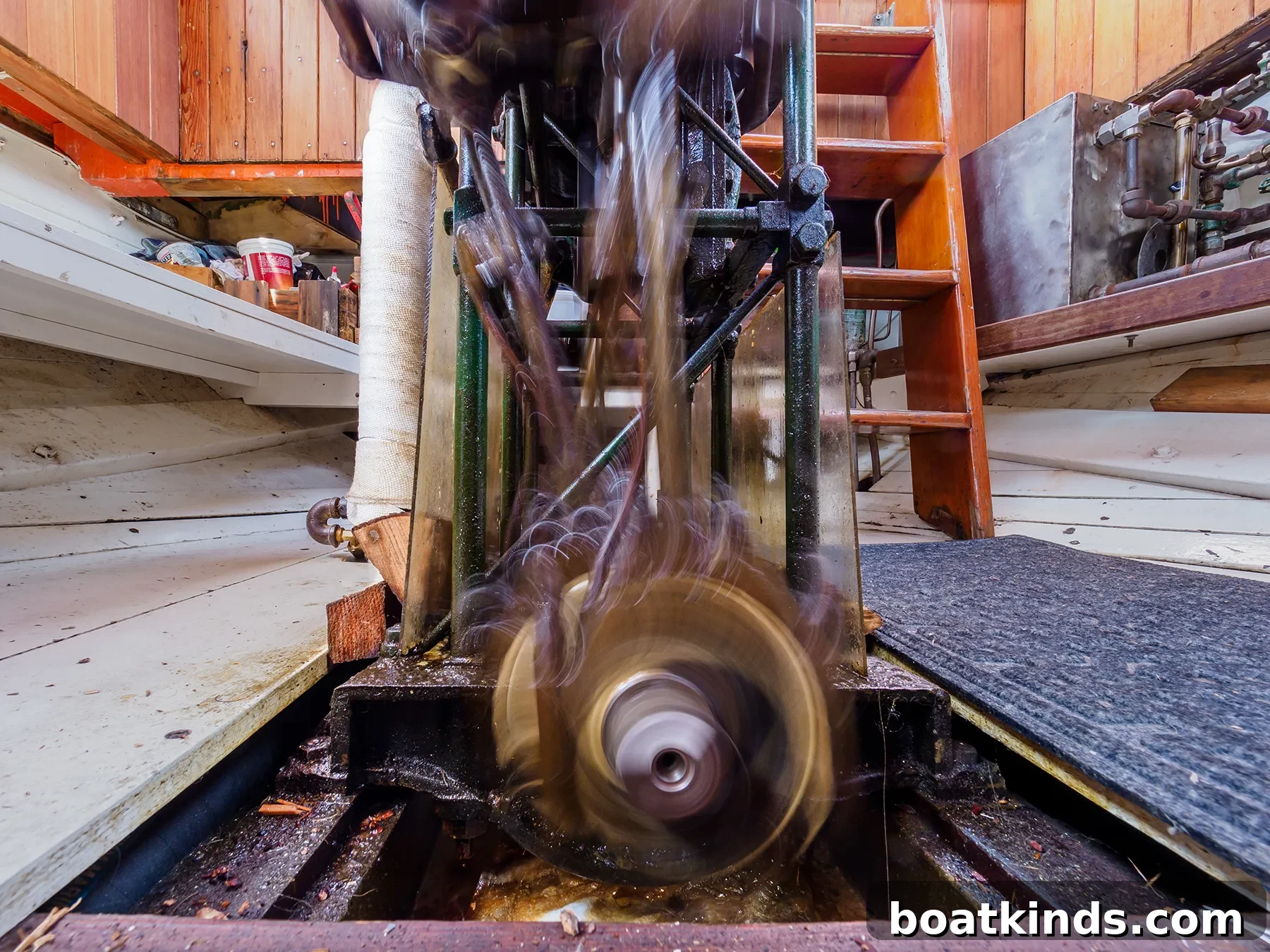
While pressure built, Hylton lubricated eccentrics, bearings and reversing linkages with 220-grade emulsifying oil, then shifted the Johnson Bar — the reversing lever at the front of the engine — directly from forward to reverse. Dodo’s Type K engine, built in 1918, produces about 20 horsepower and her top speed is roughly 7.5 knots at 325 rpm. At cruising speed she consumes about one pound of seasoned firewood per minute and can carry up to a cord of wood in the boiler room for longer trips.
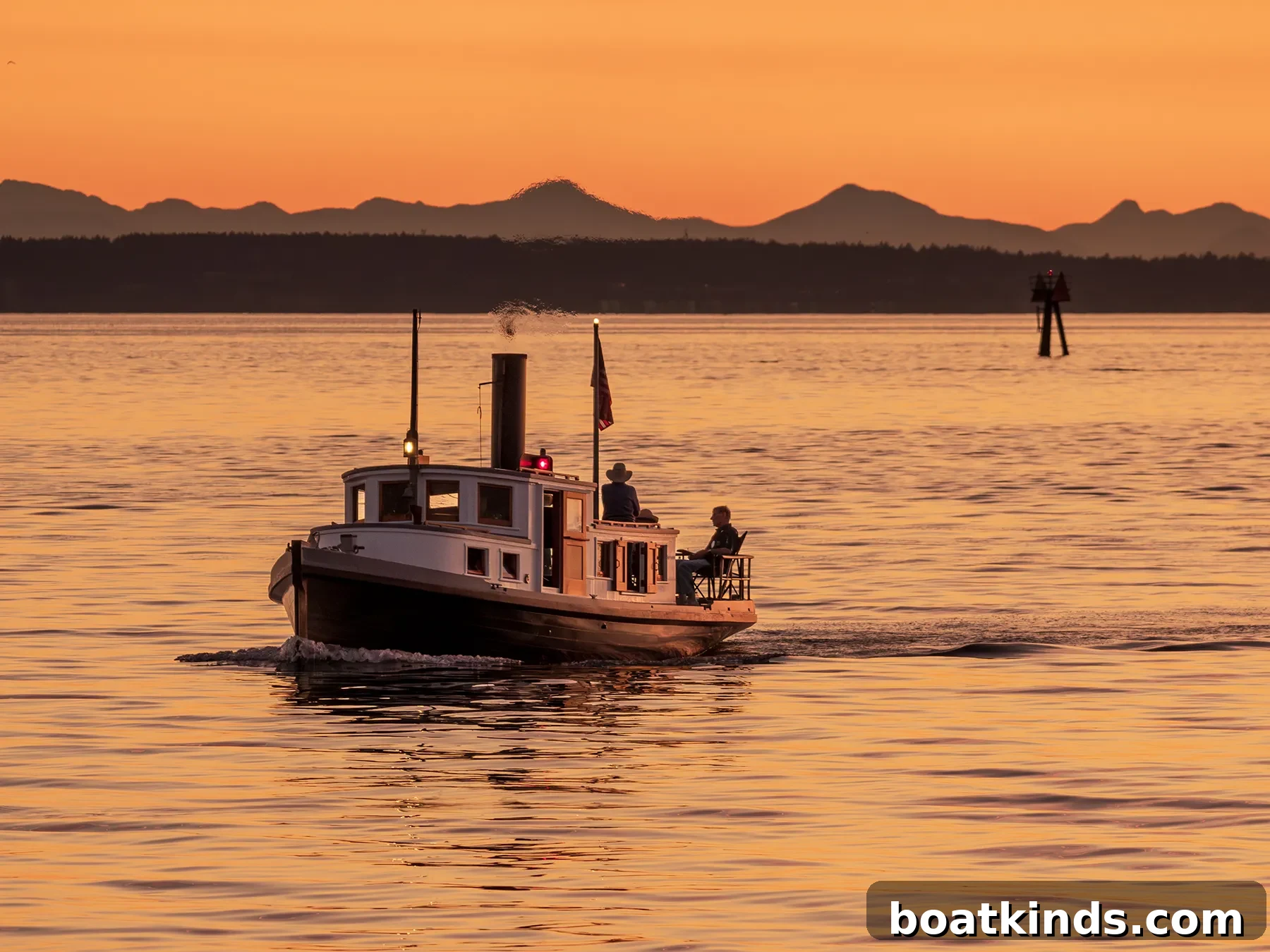
Dodo is a straightforward, historic Puget Sound tug with painted and oiled wooden topsides and a compact, functional interior. Because the boiler, engine and fuel take up much of the hull space, accommodations are modest: a forward cabin with a V-berth, a simple galley and a composting head. Throttle orders are passed by voice telegraph, and it’s not unusual for the captain to do an extra loop on the return trip just to use up surplus steam.
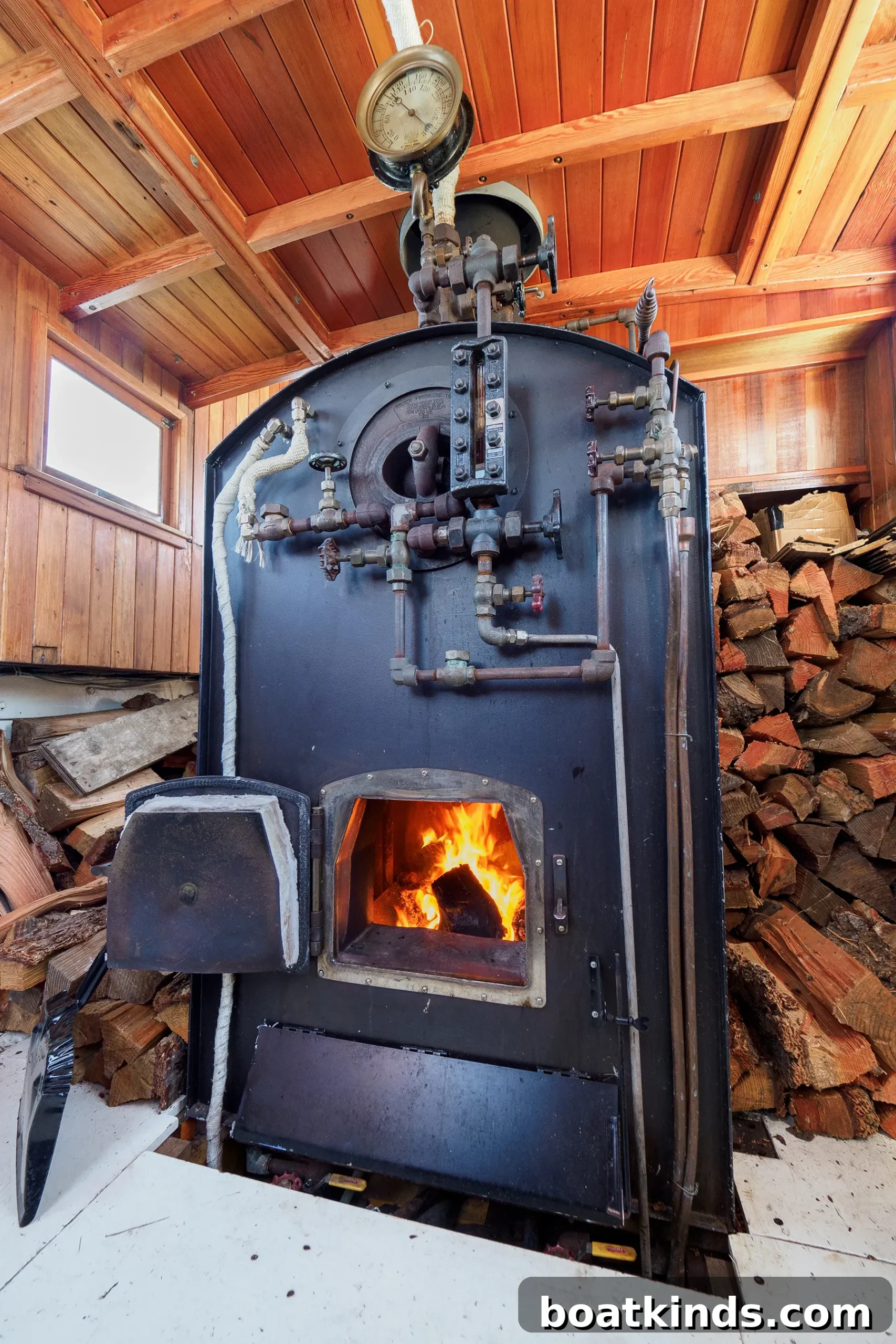
Running a historic steamboat is calm rather than frantic, but boiler temperature and pressure demand constant attention. Hylton and his wife Emily share helm and engine-room duties: one navigates while the other tends the fire and manages steam. Their daughter Jocelyn joined this trip to Blaine to enjoy one more cruise before leaving for college — a family tradition and an experience she says few of her peers have.
Built between 1915 and 1934 by Harold Lanning Sr., Dodo was constructed with fir planking fastened to oak frames and marked a major anniversary in the 2020s. During the Depression she worked fishing, crabbing, shrimping and towing logs, often burning collected driftwood. Later she served as a pleasure vessel and was repowered with a Perkins diesel in 1990 when the original Type K engine was sold overseas.
Hylton calls Dodo part of his steam heritage. He first knew the boat as a teenager and bought her in 2008 with the goal of returning her to steam power. In a fortunate turn, the original Type K Navy engine resurfaced for sale in 2010; Hylton purchased it and arranged transatlantic shipment, restoring the boat’s historic propulsion.
“Steam boats don’t feed instant gratification,” said Michael Cross, a retired mechanical engineer and NWSS safety chair. “You manage the fire, the steam and plan what will happen in the next 15 minutes.” Hylton agreed: progress with steam is long-term satisfaction. He designed a new boiler with 130 square feet of heating surface using crisscrossed seamless pipes, beginning the project in 2010 with help from his late father, David, a mechanical engineer who introduced him to steamboat culture.
Before the new boiler could be installed, Dodo’s hull required restoration. Emerald Marine in Anacortes reinforced the pilothouse, added bulkheads and 25 steam-bent sister frames, and replaced a topside plank. With a boiler built by Andrew Van Luenen in 2013 and the original engine installed, Dodo made her first steam voyage in 2016 to a steam meet on McConnell Island.
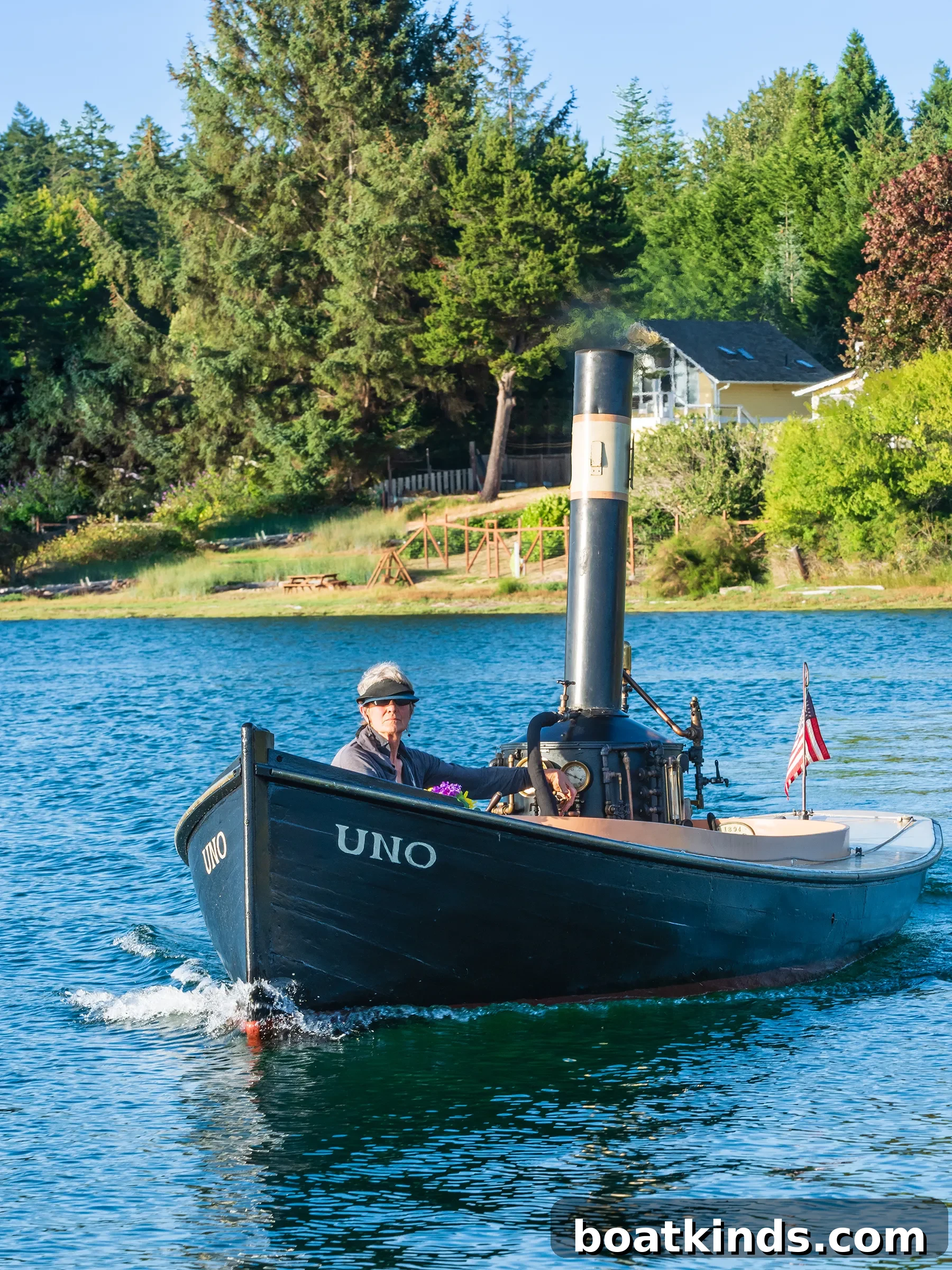
Emerald Marine also worked on Uno, a 22-foot black-hulled steam launch with a plumb bow and fantail stern that give her a striking profile. Uno has been cared for by Hylton’s aunt Stephanie on Lopez Island for nearly 50 years. She was introduced to steam in 1971 and remains active in the NWSS, serving as treasurer and mentoring others in steam craft.
Built on Lopez in 1894 by Norwegian immigrant Michael Norman, Uno began life as an oar-and-sail workboat for local island families. Over a long working life she saw oars and sails, a succession of gas engines — including engines used during rum-running eras — and finally conversion to steam in 1960. Stephanie installed a new boiler and a Stuart Turner two-cylinder compound engine in 2002; the little launch now cruises at up to about 6.3 knots at 350 rpm. “It’s only about five horsepower, but it’s like a strong draft horse,” she quips, noting the large, slow-turning propeller the fantail stern accommodates.
Most NWSS boats are trailerable, which simplifies maintenance and avoids high dock fees, though limited storage often leads owners to install diesel burners for practical reasons. Many members admit diesel is a compromise — “half a step toward the dark side” — but it packs more energy into a small space. Some use steam-atomizing diesel burners that mix steam and fuel to create a fine mist that burns cleanly.
Whether wood-fired or diesel-assisted, running a steamboat is an immersive experience. Stephanie recalls living aboard a working tug with minimal electrical conveniences and still prefers to keep modern screens to a minimum. Her hands-on life as a teacher, farmer and oiler on Washington State Ferries reflects the practical skills and stubborn independence common among NWSS members.
Harold Lanning, Dodo’s builder, captured that ethos in the 1960s: a person who wants to know what can be achieved with bare hands and mind has few choices today — building a steamboat remains one of them. “Lost worlds cannot be resurrected, but some of their qualities can and should be preserved,” he wrote.
Still Making Steam
The Northwest Steam Society began in 1973 from the Puget Sound Live Steamers, originally known as S.L.O.W. (Steam Launch Operators of the World). The society’s 50th anniversary meeting honored a proud steam heritage and marked a return to in-person gatherings after pandemic disruptions. The Steam Gage, a quarterly newsletter, keeps roughly 200 members informed, some living as far away as Australia.
NWSS members operate and maintain steamboats, steam cars, model trains and industrial machinery, drawing on skills in boatbuilding, naval architecture, carpentry, machining and welding. The volunteer-driven organization is seeking new members as longtime stalwarts age, inviting people who want to learn traditional skills, preserve steam technology and share the experience with future generations. Members freely offer knowledge, provide free rides during steam meets and sometimes mentor students building external combustion engines for school projects.
Dave Hogan, 78, a lifelong steam enthusiast and NWSS volunteer, reflected at the Blaine meeting on seven decades of steam experience and expressed hope that steam history and skills will be passed on to the next generation. The society’s gatherings, restorations and hands-on instruction aim to keep the sights, sounds and satisfaction of steam power alive for years to come.
This article was originally published in the November 2023 issue.