
Nordhavn 100: The Natural Evolution of a Proven Line
The story of the Nordhavn 100 is, at its core, the story of incremental evolution — of owners and designers seeking just a little more of what already works. The N100 didn’t arrive out of thin air; it grew from the N96, which in turn evolved from the N86. That steady progression, adding modest length and measured refinements, has guided much of Nordhavn’s design approach for decades.
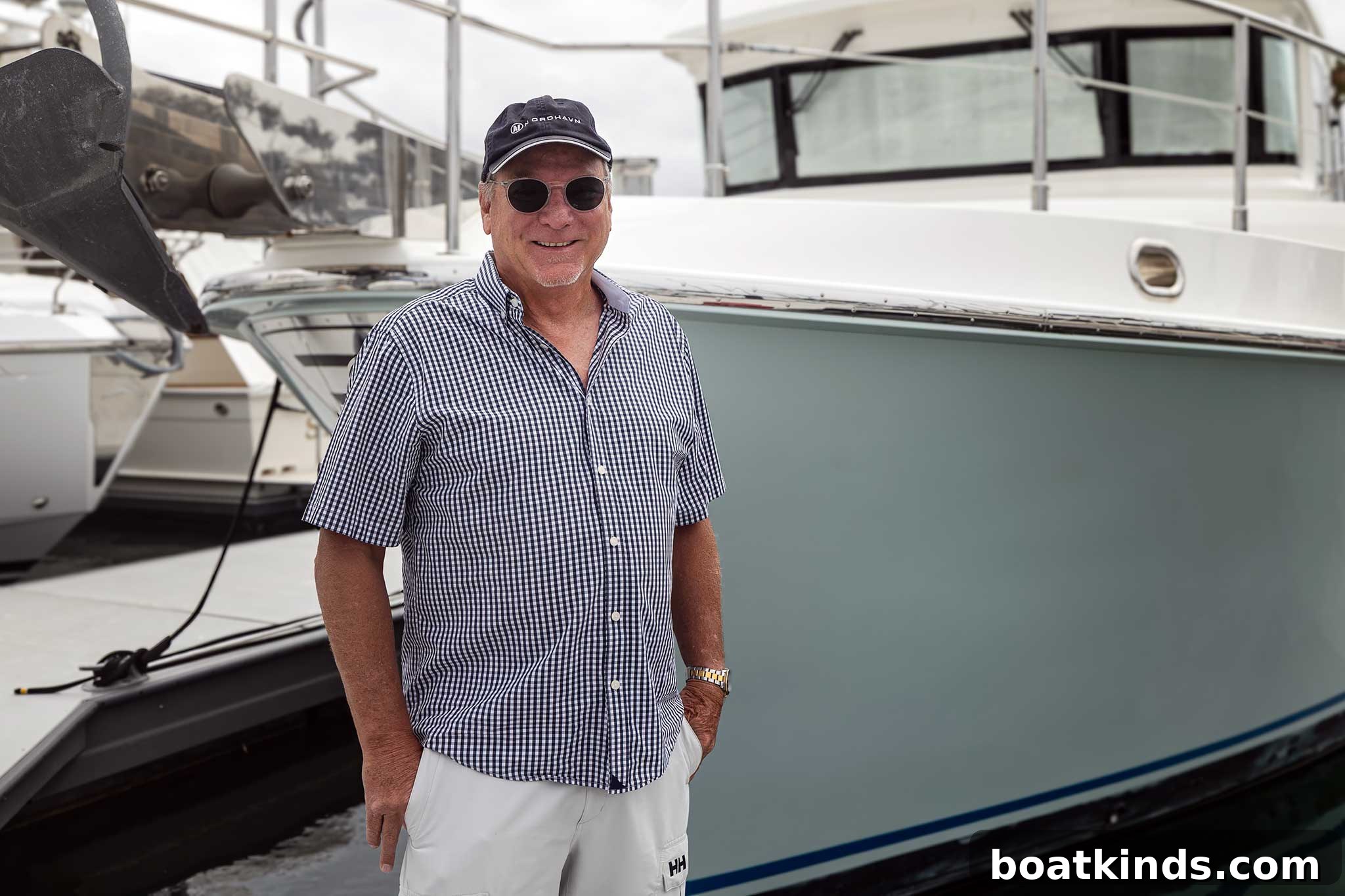
“It’s kind of the natural progression of most of our boats,” says Jeff Leishman, co-owner and chief designer at Nordhavn. “Somebody will come along and say, ‘Can you extend it a little bit? Give me a bigger cockpit and this and that?’ The 96 was extended from the 86, and now it’s at 100 feet.”
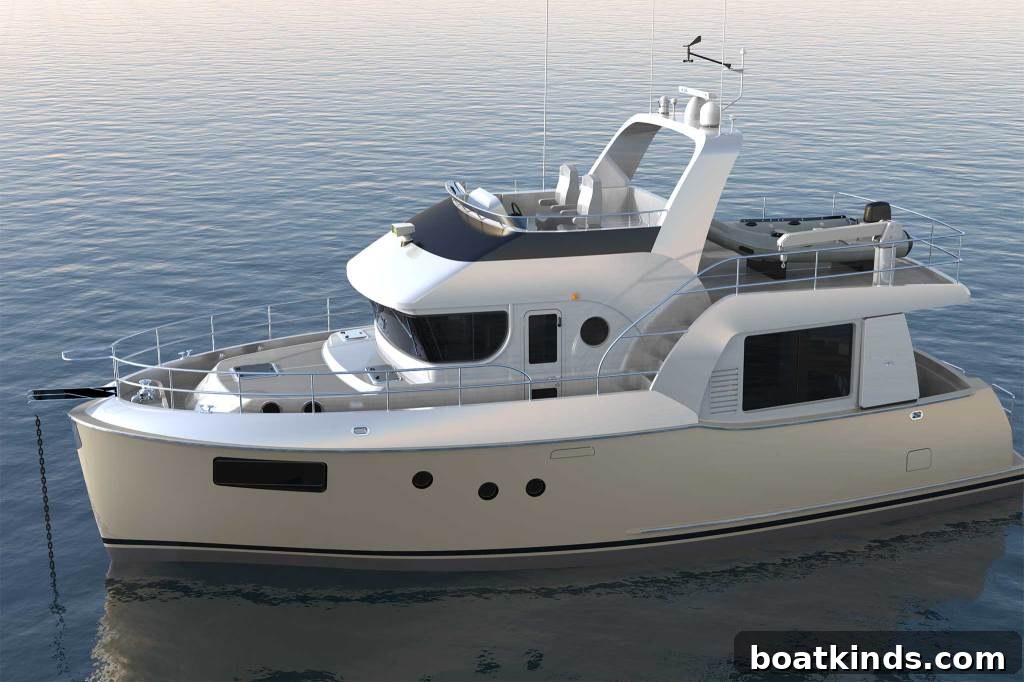
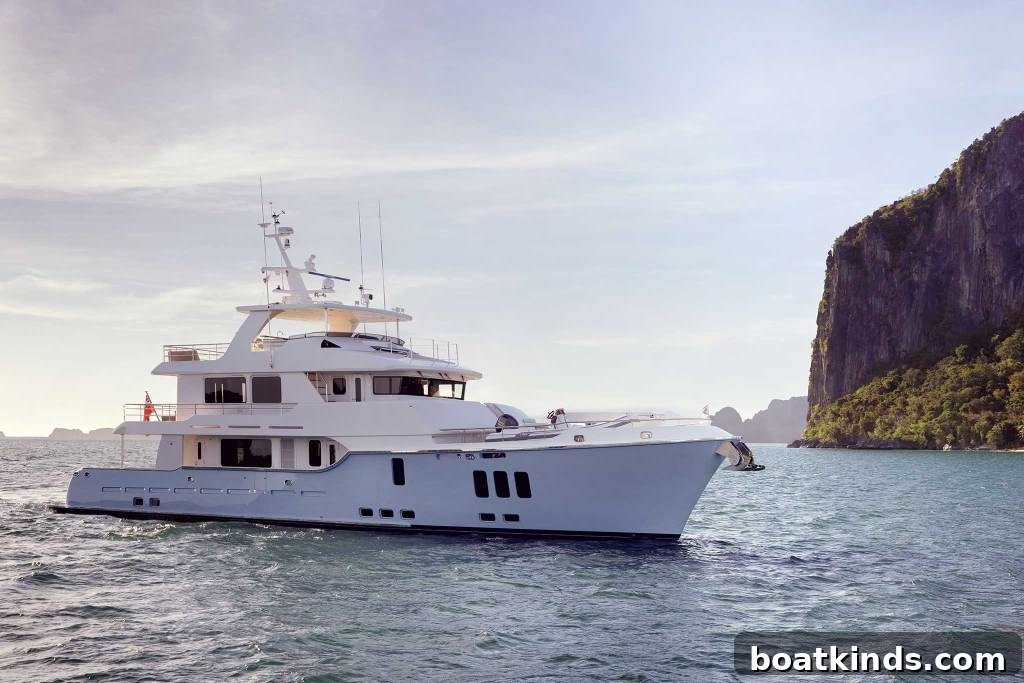
With the Nordhavn 100, the goal was simple and specific: lengthen the N96 just enough to create a larger cockpit and a more capacious lazarette, improve crew accommodations, and refine interior and exterior arrangements so life aboard feels roomier and more comfortable. That modest increase in overall length also changes the boat’s presence. Leishman notes that those extra feet shift the exterior profile toward a more megayacht-style silhouette — a transformation people notice when the boat is seen at anchor or underway.
Small Changes, Big Impact
This idea — that a few feet can make a disproportionately positive difference — applies across Nordhavn’s range. Leishman points out that adding roughly five feet to many designs tends to restore proportion and balance. “Take the 47. It’s good, but you cram as much as you can into 47 feet. You get an aft deck that’s adequate, but when you extend it another 5 feet or so, it changes the whole look of the boat,” he says. The same is true when comparing the 60 to the 55: the slightly longer boat reads as more proportional, sleeker, and less top-heavy.
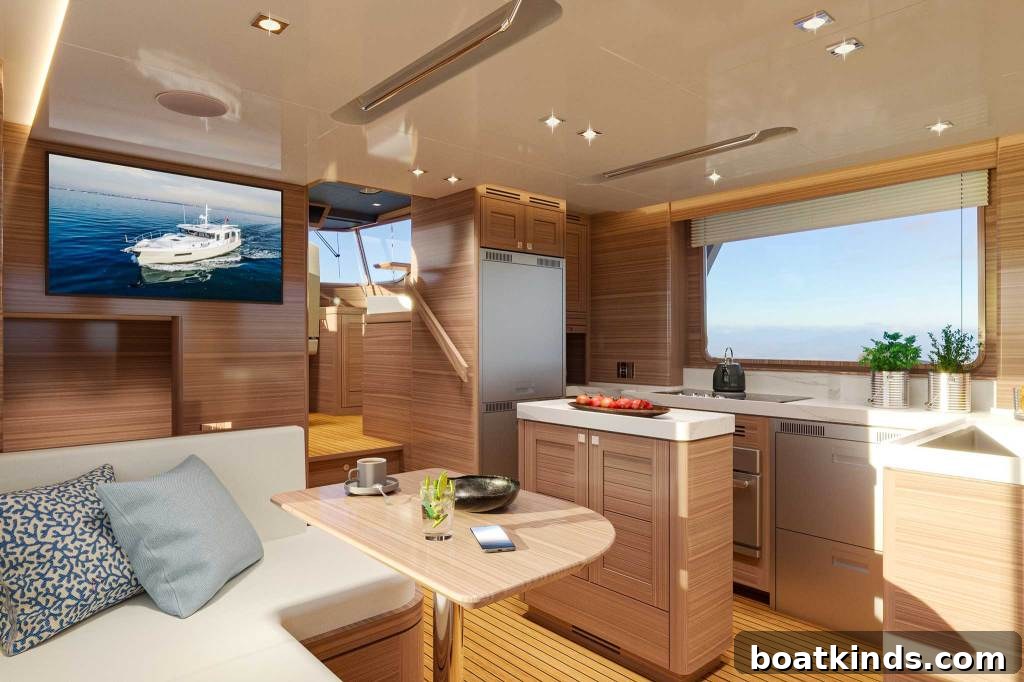
That proportional logic is why owners often ask for incremental extensions: a larger cockpit for better social space, more room for stowage below, and improved crew quarters for extended passages. In many cases, those added inches or feet also offer performance advantages. Increasing waterline length tends to reduce pitching and smooth motion, which can translate to improved cruising speed and a quieter running experience.
Designing for Performance and Comfort
Nordhavn has put that philosophy into practice in several recent projects. The Nordhavn 46 MKII illustrates how modest dimensional changes can yield major gains. Although the MKII is only six inches longer overall than the original N46, its waterline increased by more than six feet, producing less pitch, higher cruising efficiency, and significantly more interior volume along with increased fuel and freshwater capacity.
Leishman explains that extending a hull aft to add five feet can also benefit propulsion. Pushing the running gear and propellers aft improves the flow of water to the propellers and reduces turbulence caused by keels or hull appendages, which increases propulsive efficiency and lowers noise levels. Those are practical gains for owners who value both long-range capability and refined onboard comfort.
Looking Ahead: Larger and Smaller Models
Nordhavn’s incremental approach does not stop at enlargements. Leishman says the company is exploring two directions: stretching proven models and developing new ones in popular size ranges. He mentions a prospective extension of the N120 into a N125 — a project that would represent the largest evolution to date and would further apply the same design principles: better balance, improved propulsion flow, and enhanced livability.
At the same time, Nordhavn continues to consider mid-sized designs suited to owner-operators. Leishman revealed to Soundings that a new model in the mid-50-foot range is currently on a “super top-secret drawing board.” Although exact dimensions remain under discussion, the aim is clear: provide a boat that answers the demands of owners who want serious range and passagemaking capability while still being able to handle the vessel themselves.
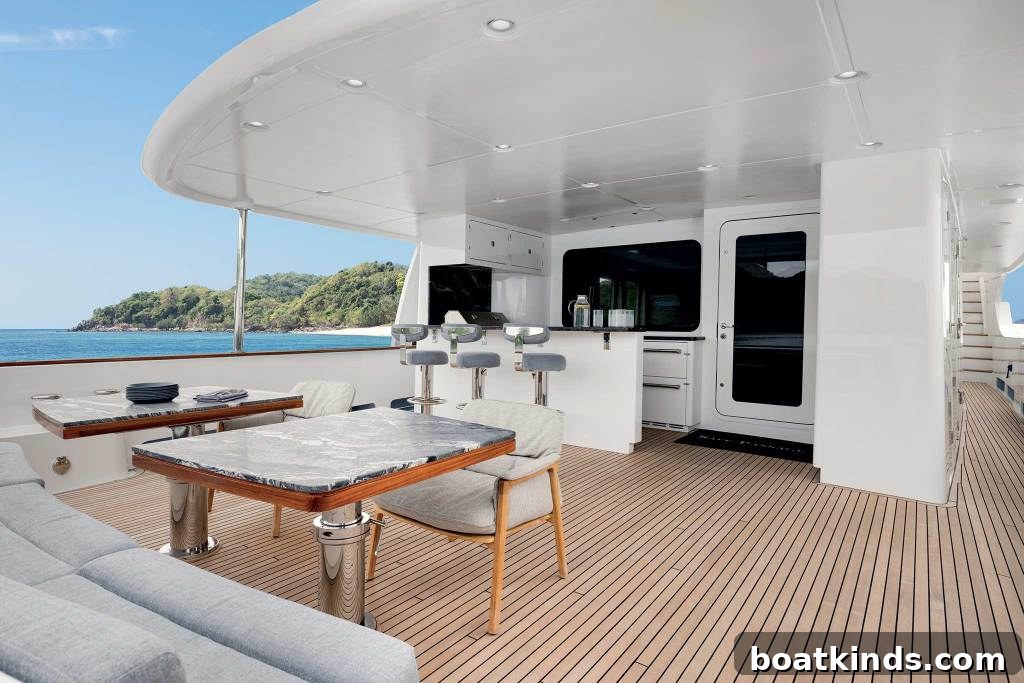
That middle-ground size has long been popular with Nordhavn owners. Many who were fans of the original N46 — and now of the N46 MKII — want slightly more space and capability without moving into the crewed-yacht category. These owners envision long voyages and extended cruising but favor boats they can manage themselves, combining seaworthiness with contemporary comforts and stowage for extended trips.
Leishman says that hands-on cruising remains central to his own priorities. “That’s where our hearts are, with the boats that we can relate to,” he notes. “Not that we don’t relate to the 120s and the 100s, but my world doesn’t include crew and that kind of money. When I’m on a boat, I like to be running the boat. That’s my idea of fun.”
For more on Nordhavn Yachts
This article was originally published in the September 2026 issue.