
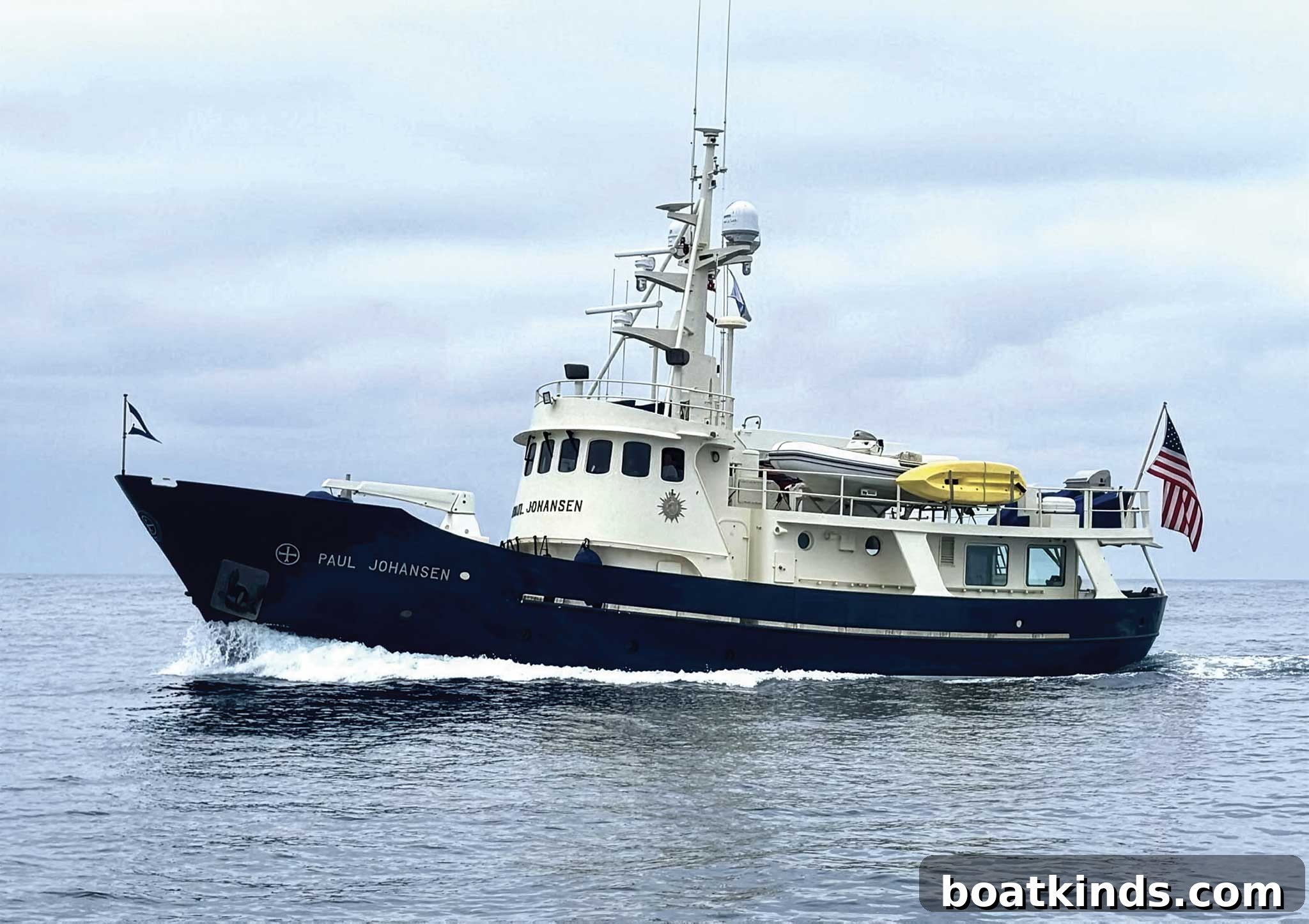
Paul Johansen: From Norwegian Rescue Ship to Ocean-Ready Expedition Home
Dave and Amanda Abrams know what it takes to turn a strong idea into a precise, working reality. When the couple — both seasoned travelers and experienced boat owners — had the chance to buy a former Norwegian rescue vessel, they recognized an opportunity to build a capable, comfortable long-range cruiser.
Dave Abrams, a former U.S. Navy Surface Warfare Officer, prides himself on restoring and refining complex projects. After leaving the Navy he established a cycle of acquiring, upgrading and selling businesses, and the same methodical approach carried over to his boats. The Abramses progressed through a series of passagemaking yachts — from a Pacific Seacraft 20 to a Californian 34, a Fisher 38 and a Cape Horn 58 — which they used extensively between the Sea of Cortez and British Columbia. For them, Paul Johansen represented the logical next chapter.
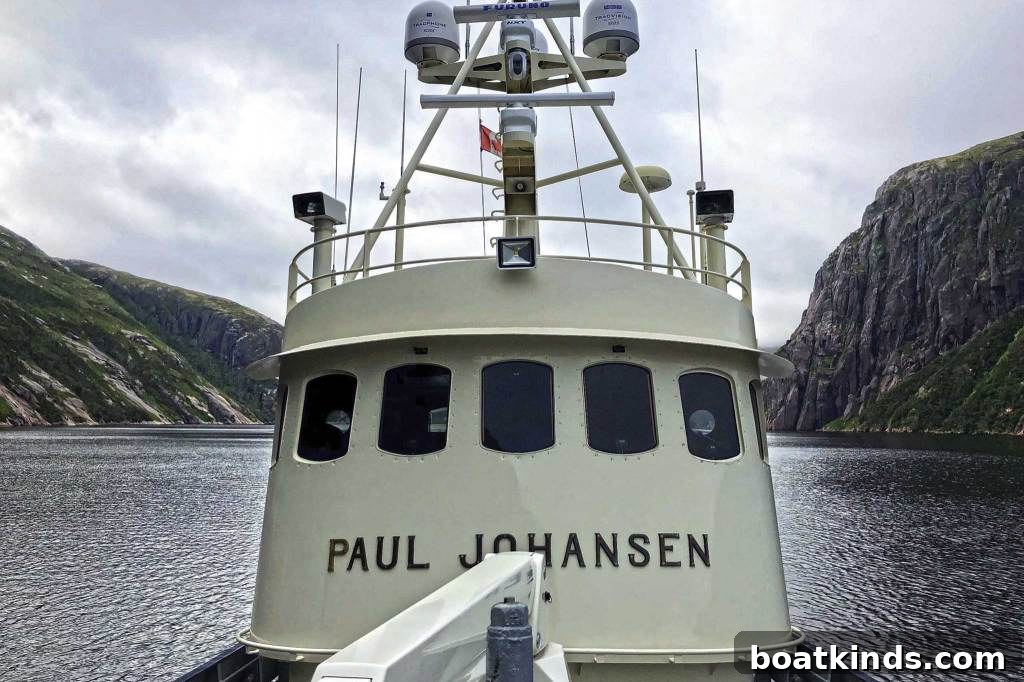
Built in 1970 by Smedvik Mekaniske Verksted in Tjørvåg, Norway, Paul Johansen was commissioned by the Norwegian Society for Sea Rescue as one of 13 vessels in her class. She measures just under 75 feet with a 19-foot-6-inch beam, a 12-foot draft and a displacement of roughly 135 tons. Cruising most comfortably at about 8 knots, she can reach 12 knots when required and carries a conservative range estimate of about 4,000 nautical miles.
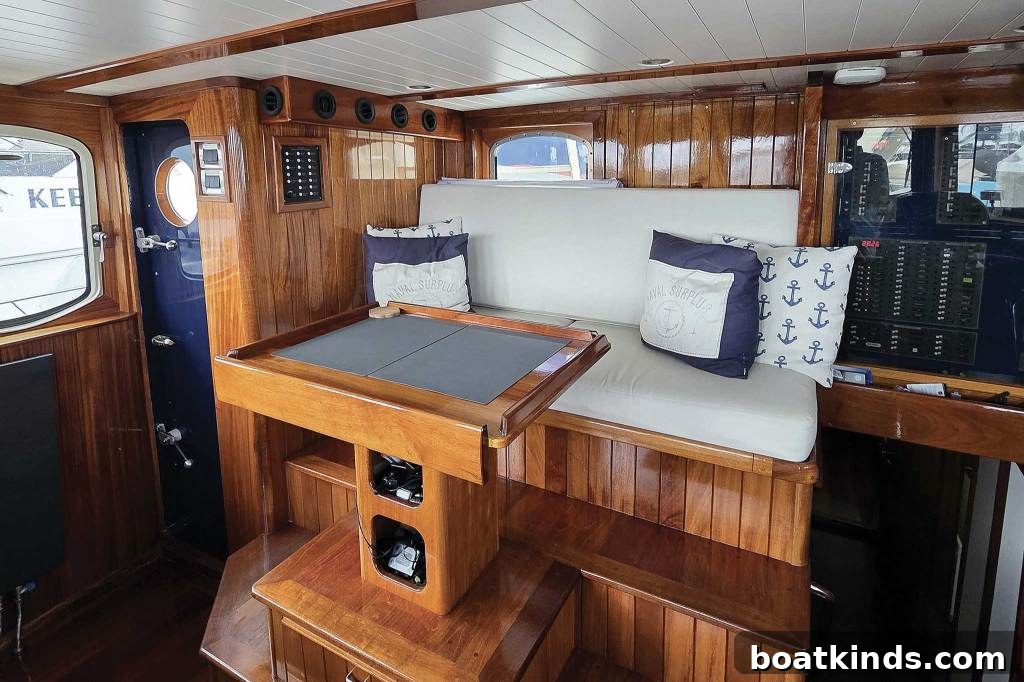
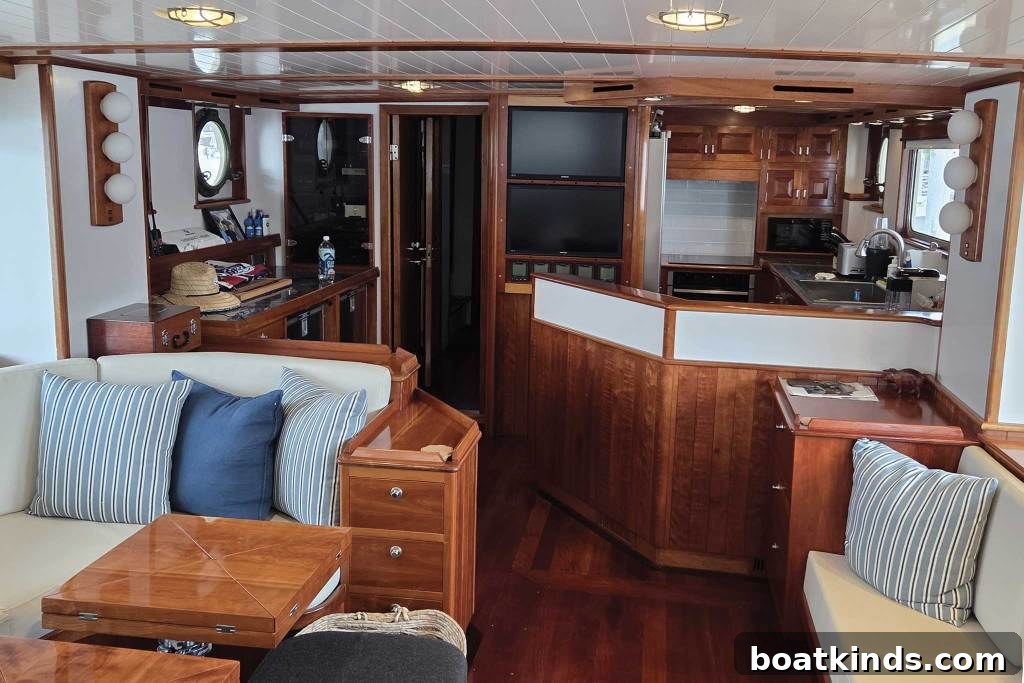
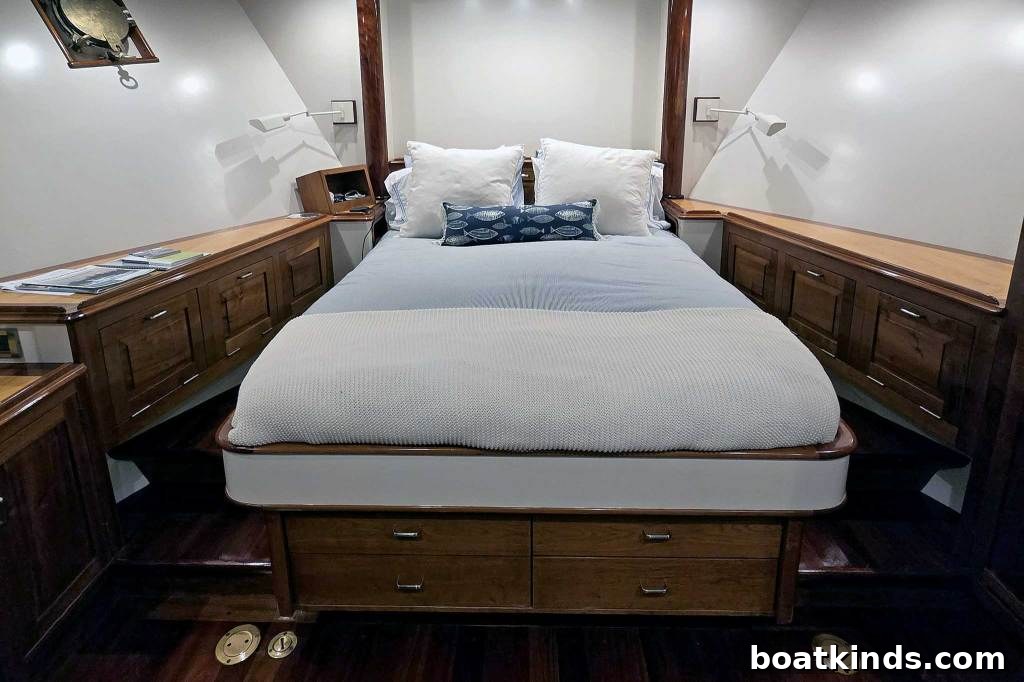
After her lifesaving career, the vessel moved to Washington state, where she underwent a major conversion in the 1990s. Over the years she served two private owners as both a personal yacht and a charter platform in the Pacific Northwest. That earlier conversion did much of the heavy lifting for later updates: the salon was lengthened and an enclosed cockpit installed, creating larger interior living spaces and transforming former commercial areas into well-appointed staterooms complete with quality carpentry throughout.
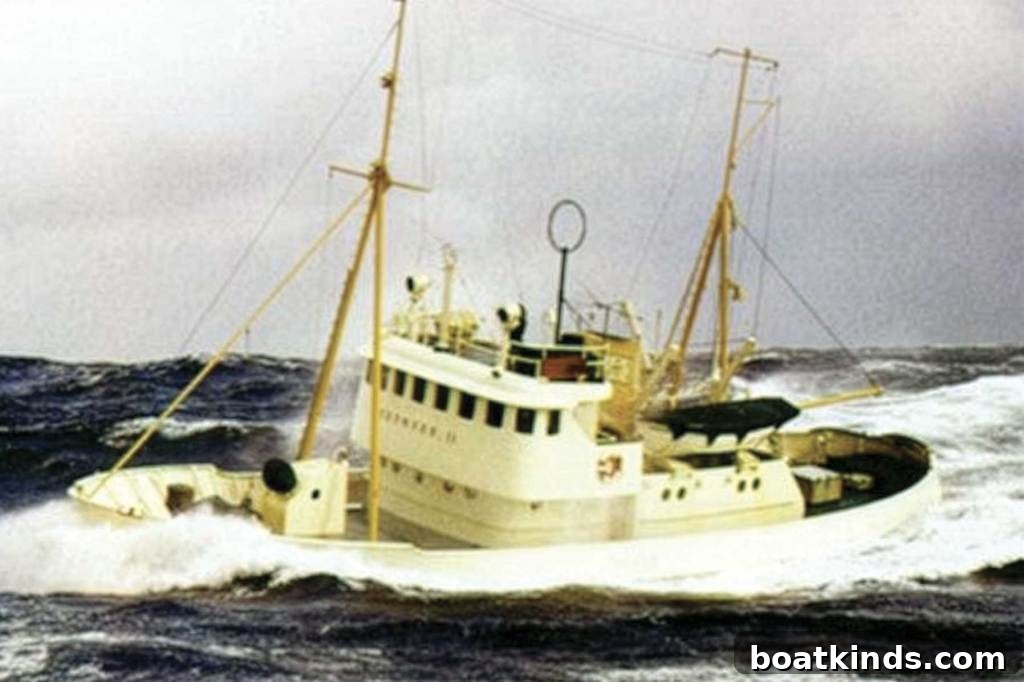
Despite its conversion to a comfortable liveaboard, the ship’s offshore capability remained uncompromised. Built of 10-mm steel and carrying a Class C icebreaker rating, she retains structural integrity even under severe conditions — the rating indicates she can handle up to roughly 20 inches of ice without compromising hull strength. She also retains her original Detroit Diesel 8V71 engines, while many other systems were modernized in the early 2000s and during subsequent refits.
Modern navigation and onboard systems now include integrated electronics with redundant stations for monitoring and control. The galley has been updated with electric appliances, supported by three generators that can be combined to provide up to 32 kW of power, allowing the vessel to run major systems and charge batteries simultaneously.
The Abramses spent three years cruising and upgrading Paul Johansen along the Eastern Seaboard before setting out for the Pacific. On the passage from Fort Lauderdale to Colón, Panama, they were mindful of piracy risks near Nicaragua. They adopted old-school countermeasures — carrying oil and tacks to scatter on decks if needed — and relied on the ship’s secure steel construction as a safe, lockable refuge for crew and valuables. At one point they tracked another vessel on an intercept course for hours; the contact approached to about 3.5 nautical miles before turning away. The Abrames suspected, correctly, that their formidable silhouette discouraged any attempt.
Her ice-rated hull also gives the vessel exceptional resilience in sudden, extreme weather. Dave recalls anchoring off Staniel Cay in the Bahamas when a microburst swept through: within minutes conditions shifted from calm to violent. While many surrounding fiberglass cruisers struggled, Paul Johansen barely moved. The combination of a 540-pound anchor and 450 feet of 19-mm chain provided exceptional holding even as wind and waves battered the anchorage.
The Abramses have spent the past year in San Diego preparing for their next phase: cruising north along the Pacific Coast in search of quiet coves and anchorages where wildlife outnumbers other boats. The vessel performs best with seas forward of the beam or dead astern for the smoothest ride, and while she’s capable of ocean crossings, the couple prefers to follow weather windows that suit their route. With a stout hull, conservative range and active fin stabilization, Paul Johansen is well suited to extend those windows and make bold cruising plans safer and more comfortable.
This article was originally published in the August 2026 issue.