
Dispute Over Alleged Discovery of Captain Cook’s HMB Endeavour at Newport Harbor
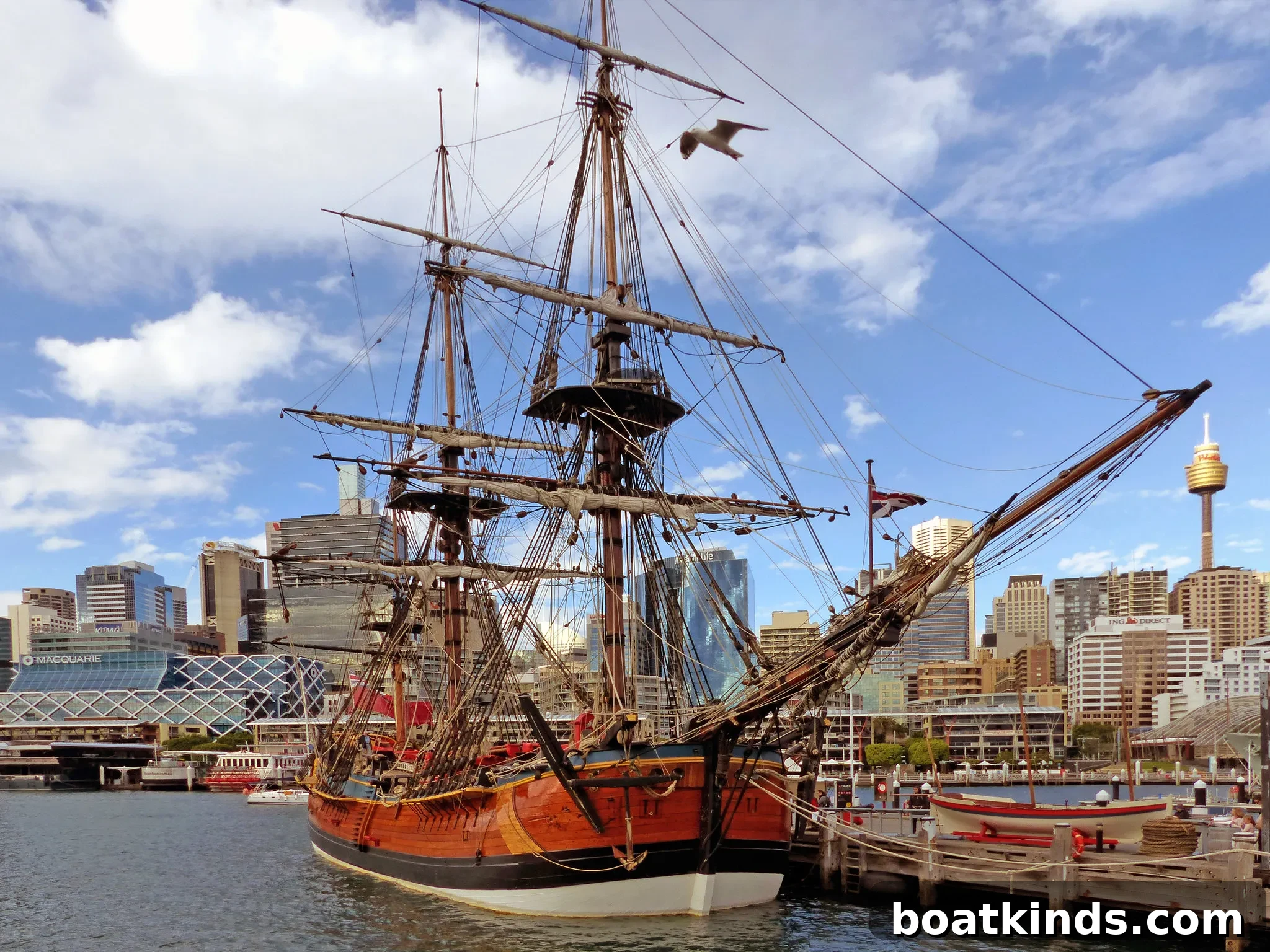
A heated disagreement has emerged between maritime researchers after the Australian National Maritime Museum (ANMM) announced that a shipwreck in Newport Harbor is the long-sought HMB Endeavour, the vessel commanded by Captain James Cook on his first Pacific voyage. The declaration was immediately challenged by the Rhode Island Marine Archaeology Project (RIMAP), which says the identification is premature and that research protocols have been breached.
Conflicting Claims
Kevin Sumption, Director and CEO of the ANMM, publicly stated that the Endeavour has been found. The ANMM’s announcement generated strong public interest given the vessel’s historical importance to Australia and New Zealand. However, Dr. Kathy Abbass of RIMAP — the team that has been leading fieldwork and analysis in Newport Harbor — responded that the museum’s claim is made too soon.
Dr. Abbass emphasized that while artifacts and features at the wreck site are consistent with what might be expected of the Endeavour, there is not yet indisputable scientific evidence to establish the wreck as that specific ship. She stressed RIMAP’s role as the lead organization in the investigation and expressed concern that the ANMM’s public statement violated an agreement outlining how research findings were to be shared.
What RIMAP Says
According to RIMAP, the site contains material that could belong to a late 18th-century British vessel, but several unresolved questions remain. Those uncertainties include distinguishing the wreck from other ships deliberately sunk in the same period, variable preservation conditions, and the need for conclusive diagnostic artifacts or documentation that would tie the remains specifically to the Endeavour.
Dr. Abbass noted that RIMAP accepts the cultural importance of the Endeavour to Australian audiences, but insisted that any final identification must follow rigorous scientific and archaeological methods rather than be shaped by national sentiment or political pressure.
ANMM Response and the Stakes
The ANMM responded firmly to RIMAP’s criticism, rejecting the claim of a contract breach and defending its conclusion. A museum spokesperson said that the ANMM stands by its announcement and that differing opinions between institutions are not unexpected in high-profile heritage investigations.
The dispute highlights the complexities and high stakes involved in identifying historically significant shipwrecks. Accurate identification can carry cultural and scientific value, affect public memory, and influence how heritage is preserved and interpreted. Misidentification, however, can mislead research and public understanding, which is why many archaeologists emphasize careful, transparent procedures before making definitive claims.
Historical Background on HMB Endeavour
HMB Endeavour is one of the most famous British exploration vessels of the 18th century. Commanded by Captain James Cook from 1768 to 1771, Endeavour sailed to the South Pacific to observe the 1769 transit of Venus from Tahiti. The voyage is also known for charting large sections of New Zealand and the east coast of Australia in 1770, contributing significantly to European geographic knowledge of the region.
After her voyage under Cook, the ship was sold by the Royal Navy and renamed Lord Sandwich. During the American Revolutionary War, Lord Sandwich was used as a prison ship and, along with several other vessels, was deliberately scuttled in 1778 to help block Newport Harbor. The deliberate sinking of multiple vessels in the same area complicates efforts to attribute any single wreck to the Endeavour without clear, corroborating evidence.
Next Steps and Ongoing Research
Both organizations appear committed to continuing the investigation, though they are at odds over the timing and manner of public announcements. Experts say conclusive identification would ideally involve multiple lines of evidence, including distinctive construction features, material analysis, historical records, and stratigraphic context that link the wreck to known details of the Endeavour’s later service and loss.
For now, the debate underscores the need for careful interdisciplinary collaboration between archaeologists, historians, conservators, and museum professionals when dealing with high-profile maritime discoveries. As research continues in Newport Harbor, further analysis and peer-reviewed findings will be essential to resolving whether the wreck is indeed the famous vessel that played a pivotal role in Pacific exploration.