Miriam Payne’s Gritty Solo Row Across the Atlantic: Near-Miss Turns into a Record

The toughest moment in Miriam Payne’s 59-day, 16-hour, 36-minute solo crossing of the Atlantic came when she realized she would reach Antigua — but might not do so quickly enough to claim the record. The 23-year-old had been told by her shore support that maintaining an average of 55 nautical miles per day, and ideally 58, would make her the fastest woman to row unassisted across the ocean in the Talisker Whisky Atlantic Challenge. At the time, she believed it was achievable.
A few weeks out from the finish, the forecasts started to shift. What began as a manageable northerly breeze turned into a sustained headwind, and each weather update brought new setbacks. “At one point I rowed for 18 hours and covered less than 10 miles,” Payne remembers. “I could feel the record slipping away.”
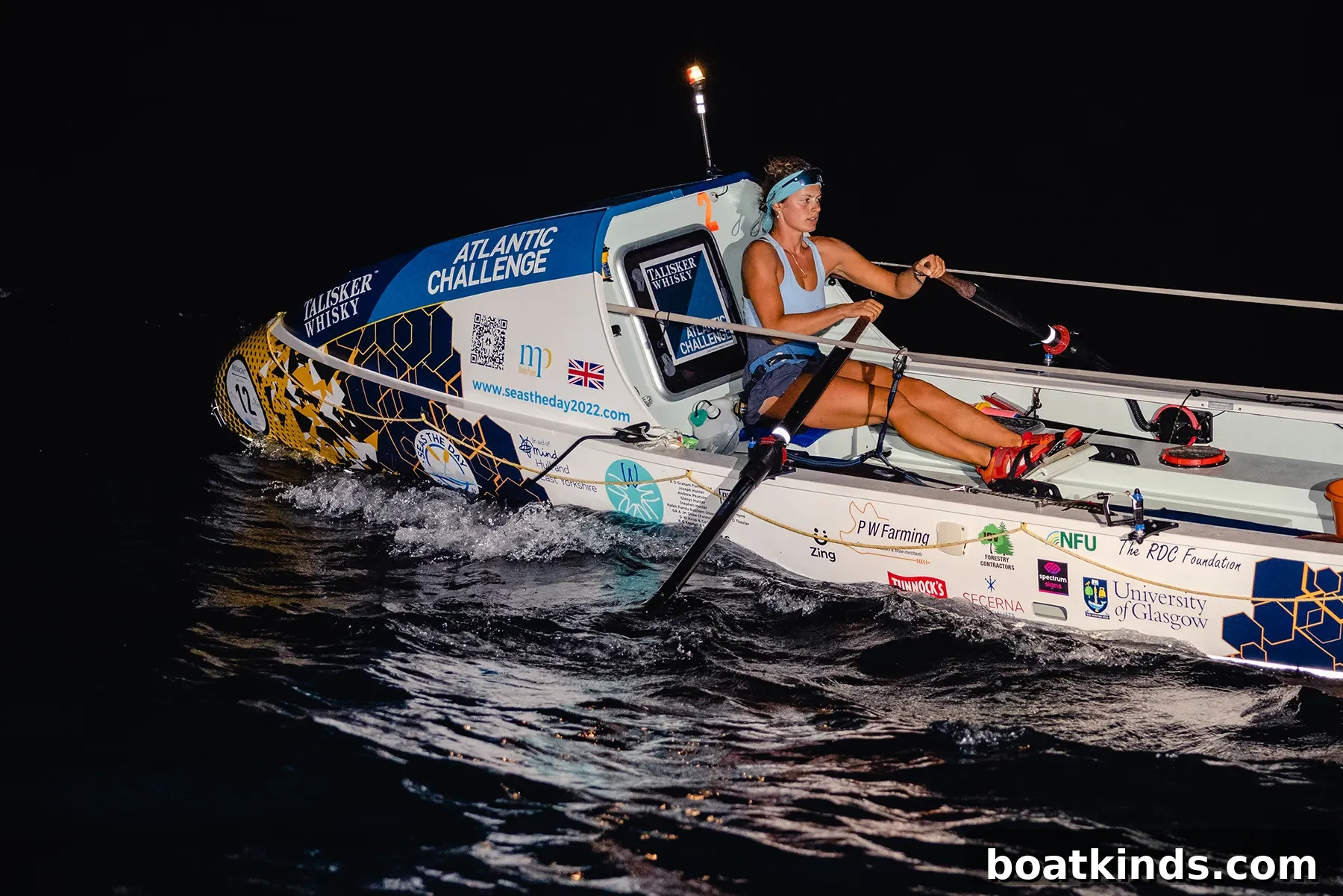
For a long stretch she simply could not make the speed she needed. By the time conditions improved, hitting the record required a pace she had only reached once over the previous 2,500 miles since departing the Canary Islands. She didn’t think it was possible — until she got a weather window that offered a slim chance.
Payne reduced her rest to just a few hours across nearly a week, positioning herself for a nonstop final push into Antigua. The race safety officer told her she still had a chance; barely. “I hated him for saying it then, but he was right,” she says. “He said, ‘It might just come down to how much you want it.’”
On the final day she rowed through the night and into the next day, keeping rest breaks to two or three minutes only to drink and grab calories. She finished with a time that beat The Talisker Whisky Atlantic Challenge solo female record by two hours and 38 minutes. The last 22 hours were an all-out effort of almost continuous rowing.
Nutrition and energy management were crucial. Payne consumed roughly 5,000 calories a day from freeze-dried meals, snack packs, breakfast bars, chocolate and, famously, potato chips. She craved the crisps so badly that by the time she needed one for a morale boost near the end, they were gone — something she now regrets.
Payne had been considering an Atlantic row since her early teens, when someone first mentioned the idea. That spark led her to row competitively at the University of Glasgow while studying physics with a concentration in astrophysics. She trained, fundraised and planned for the Talisker challenge alongside her studies.
She emphasizes that physical fitness is essential, but mental resilience matters even more. “Knowing your boat and your equipment is also vitally important,” she says. Self-reliance is constant: during the crossing she had to perform maintenance tasks alone and make tough decisions without immediate help.
One of her most surprising and best days at sea came not from record pace, but from maintenance — cleaning the hull. Marine growth had built up despite antifouling paint and was slowing the boat. Alone and harnessed to her vessel, she climbed over the side with a scraper, dove, and cleared the fouling. The act was terrifying at first; there’s no one to help if you get into trouble. But after she finished she felt elated, smiling for days at the adrenaline and the strange joy of swimming miles from land.
Her advice to anyone contemplating a trans-Atlantic crossing — whether in a rowing shell, sailboat, or motor vessel — is practical and decisive: stop calling it a dream and turn it into a goal. “If you label it a dream, it feels distant. Call it a goal, sign up for something, make a plan with a buddy boat or enter a regatta. Take concrete steps,” she advises.
Payne urges prospective crossers to start small and keep building momentum. “Complete one small step after another,” she says. “Those small steps eventually lead to something big. Out there I realized many more people are capable of this than they think, if they can recognize their own potential.”
— Kim Kavin
This article was originally published in the August 2023 issue.