
Zaida: The 1937 Alden Cutter and Her Service in the Coastal Picket Patrol
The story of the 1937 Alden cutter Zaida III is a testament to craftsmanship, longevity and patriotic service. Built with exceptional materials and attention to detail, Zaida served during World War II and has been protected by devoted caretakers for decades. In an era of planned obsolescence, her survival celebrates hand skills, durable design and the determination of those who preserve maritime history.
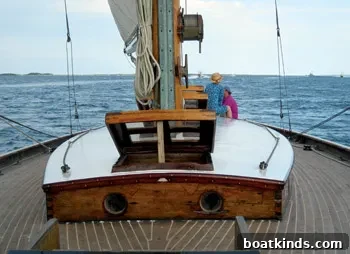
When the United States entered World War II, German U-boats began sinking merchant ships off the East Coast. With the Navy short of small patrol craft, the Coast Guard — operating as a branch of the Navy in wartime — expanded its coastal patrol capability by enlisting privately owned yachts. Owners of vessels larger than 50 feet lent them to the service; these became Coast Guard Reserve boats. Experienced civilian skippers and crew who could not serve in the regular armed forces were assigned as Temporary Reserves. By 1942 this volunteer fleet, nicknamed the “Hooligan’s Navy,” was organized as the Coastal Picket Patrol, establishing a chain of sail-powered picket stations from Maine to Florida to spot submarines, direct other forces to contacts, and rescue survivors from attacked ships.
Commissioned by George E. Ratsey of Ratsey & Lapthorn, designed by John Alden and built by Henry B. Nevins in 1937, Zaida was a compact, strongly built cutter that stood out even among the notable yachts of the picket fleet. At 57 feet she was one of the smaller vessels yet served alongside yawls, schooners and brigs that ranged far larger. All the patrol yachts were painted Navy gray, equipped with radio gear and assigned Coast Guard designations; Zaida sailed as CGR 3070 based out of the Picket Patrol’s Greenport, New York, station.
During a December 1942 patrol off Nantucket Shoals, Zaida was knocked down in a near-hurricane nor’easter. Rigged as a yawl at the time, she lost her storm trysail and her mizzen mast, leaving her dismasted, without power, and hounded by driving snow. The crew lashed improvised repairs and bailed constantly as foul weather shredded sails and tore stove mountings loose.
The Royal Navy destroyer HMS Caldwell came alongside to render aid. To calm the seas for a tow, Caldwell jettisoned bunker fuel, which unfortunately slicked Zaida and her crew as seas washed aboard. A tow was eventually rigged but later parted, and Caldwell could not reestablish contact. Zaida drifted farther offshore; radioed positions set off an extensive search. After weeks driven by winter gales and suffering shortages of food, injuries and exhaustion, the crew managed to make headway under jury-rigged canvas. Three weeks after the knockdown, Zaida made landfall off Cape Hatteras on Christmas Eve and returned to port. Her owner, George Ratsey, died shortly after her recovery.
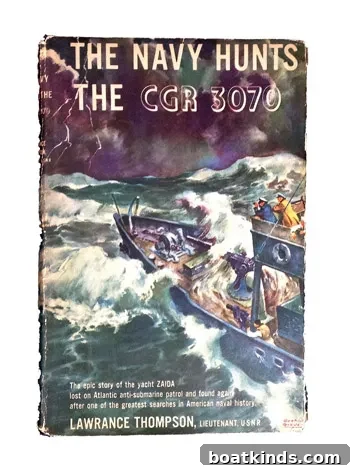
The dramatic episode and the search for CGR 3070 are documented in the 1944 account The Navy Hunts the CGR 3070 by Lt. Lawrance Thompson (USNR). Reading that history highlights how limited wartime communications and rescue equipment were compared with modern gear and underscores the resilience of the yacht and her crew. Zaida’s crew survived in part because she was robustly built and because those aboard trusted the boat’s ability to hold together under extreme strain.
In 1978 David Lish, then 28, acquired Zaida. A classic-boat owner with years of repair and service experience in Huntington, New York, Lish recognized Zaida’s exceptional construction and committed to her long-term care. His stewardship has been defined by continuous preservation rather than wholesale restoration: targeted repairs, replacements and rigorous maintenance to keep the original character and structure intact.
Zaida’s construction illustrates the standards of her era. She was planked with 1-5/8-inch African mahogany over 3-inch bent white oak frames, fastened with Everdur bronze and fitted with bronze strap frames and plated white oak floor timbers. Her trunk cabin is Honduras mahogany with bronze hanging knees; bronze bolts secure her 11-ton lead ballast keel. Structural double shelf and clamp timbers plus longitudinal stringers add strength. Her deck is double-planked, with teak over yellow pine, and the interior features raised-panel Honduras mahogany and butternut. These high-grade woods and hardware are rare in modern production and difficult to replicate today.
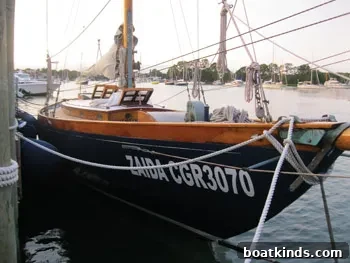
Lish’s work over nearly four decades has included refastening and recaulkings, deck repairs, replacement of keel bolts and rail caps, reconstruction of the transom and necessary sister-frame repairs. He has replaced engines as needed and regularly services Zaida’s original Sitka spruce hollow mast and booms, removing and varnishing them seasonally. Maintenance has been relentless: annual sanding, painting and varnishing, and significant structural work at intervals to keep the yacht seaworthy.
Family and friends have played a vital role in that care. Lish credits his wife Bernadette as first mate and primary helper; his son Damon has assisted with heavy tasks such as replacing 16 keel bolts; his daughter Coriander has offered consistent support. Lish also organized Friends of Zaida Inc., a preservation corporation, and has reached out to institutions like the International Yacht Restoration School and Mystic Seaport Museum about long-term stewardship options, efforts that often require endowments to secure a vessel’s future.
Now based in Greenport, only a short distance from Zaida’s wartime berth, Lish faces the common challenge of classic-boat ownership: how to secure a future steward so the yacht will continue to sail and educate future generations. He has maintained Zaida through hands-on labor and professional work, but recognizes that age and retirement make planning for the yacht’s long-term preservation urgent.
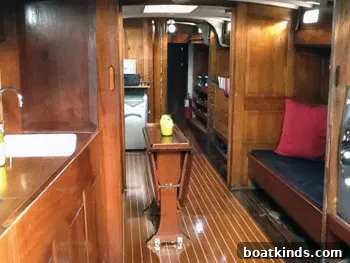
Zaida embodies the finest era of American yachting: designer, owner and builder working in concert to produce a vessel of beauty and strength. Her service in the Coastal Picket Patrol is a distinctive chapter in U.S. maritime history, and the courage of the volunteer sailors who served in those small craft should be remembered. Today, few of the roughly 120 picket yachts remain actively sailing, and Zaida stands as a rare, living example.
For more information about Zaida, contact David Lish at [email protected] or David Jones Yacht Brokerage, (207) 236-7048.
This article originally appeared in the April 2016 issue.