
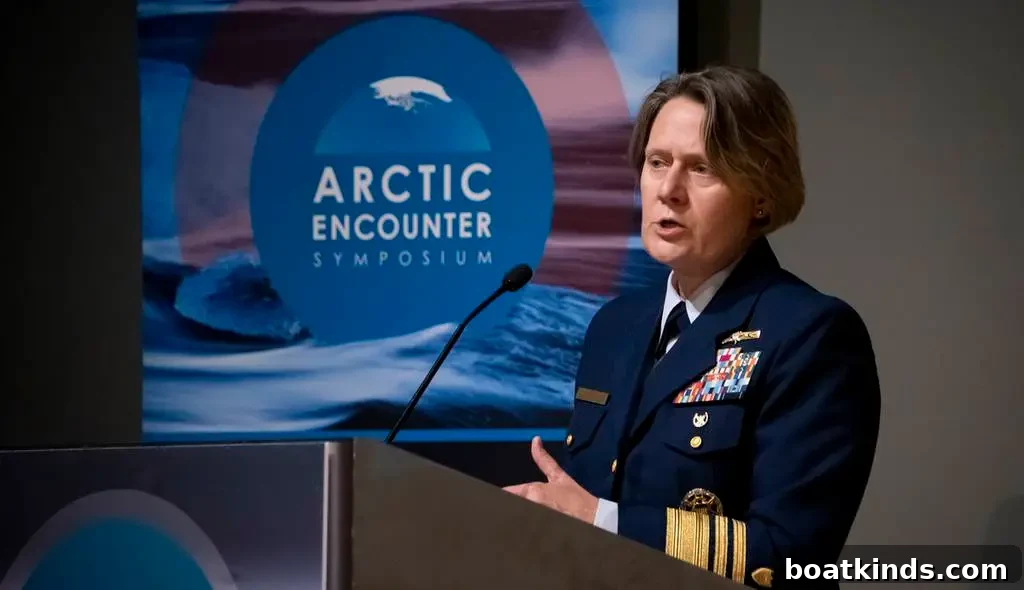
Coast Guard Commandant Highlights Urgent Personnel Challenges and Plans for Reform
New U.S. Coast Guard Commandant Admiral Linda Fagan recently told lawmakers that the service is confronting a broad set of personnel challenges that require both immediate attention and long-term reform. Speaking to members of the House Subcommittee on Coast Guard and Maritime Transportation, Admiral Fagan underscored that improving the service’s human resources systems is now a top priority.
“My highest priority as commandant is to transform our talent management system, which has not significantly changed in 75 years, to better serve our people in the 21st century,” Admiral Fagan said. That remark reflects a recognition that recruitment, retention, promotion, and overall career management systems in the Coast Guard need modernization to match contemporary expectations, workforce dynamics, and operational demands.
According to Military Times reporting, the Coast Guard remains short of reaching an upcoming recruitment target of 4,200 new enlistments. To address the gap, Admiral Fagan noted that the service has added 15 new recruiters to bolster outreach and enlistment efforts. While the additional recruiters represent an immediate step to increase capacity, the commandant made clear that recruitment alone will not solve deeper structural issues affecting personnel readiness and morale.
Beyond recruitment numbers, Admiral Fagan emphasized two quality-of-life concerns that are closely tied to staffing and retention: affordable housing and access to reliable childcare. She told lawmakers that more must be done to ensure service members and their families have access to affordable housing options and adequate childcare services. These elements are essential for retaining skilled personnel and for ensuring that Coast Guard members can meet both mission requirements and family responsibilities.
The problems described by the commandant reflect a mix of long-standing institutional practices and emerging workforce trends. A talent management system designed decades ago often struggles to accommodate modern career patterns, dual-income households, geographic mobility preferences, and the expectations of younger recruits. The Coast Guard’s operational demands—ranging from search-and-rescue and maritime safety to port security and environmental protection—require a steady, well-supported workforce capable of adapting to evolving missions.
Transformation of the talent management system as described by Admiral Fagan would likely involve modernizing recruitment techniques, updating promotion and assignment processes, and improving support services for personnel and families. Although specific reform measures were not detailed in the subcommittee session, the priorities she outlined suggest a multipronged approach: strengthening recruiter capacity, adapting personnel policies to contemporary career paths, and investing in family support resources such as housing and childcare.
Improved recruitment outreach can include targeted marketing, partnerships with communities and schools, and enhanced virtual recruiting tools to reach a broader and more diverse pool of candidates. Equally important are retention efforts that focus on career development, predictable promotion pathways, and incentives that align with the realities of service life. Support services—especially affordable housing near duty stations and reliable childcare—are critical pillars that help retain skilled personnel and reduce turnover driven by family needs.
Admiral Fagan’s remarks to the House subcommittee underscore the connection between personnel policy and operational readiness. A modernized talent management system, combined with meaningful investments in housing and family services, would help the Coast Guard attract and retain the workforce necessary to fulfill its missions in the years ahead. The service’s shortfall in meeting the enlistment goal and the addition of new recruiters signal the immediate challenges, while the call for systemic transformation points toward sustained reform.
As Congress and Coast Guard leaders consider next steps, policy makers and service officials will likely weigh short-term measures to boost enlistment alongside longer-term structural changes to ensure the Coast Guard’s personnel systems are fit for the 21st century.