
San Juan 38: Semi‑Custom Performance from San Juan Yachts
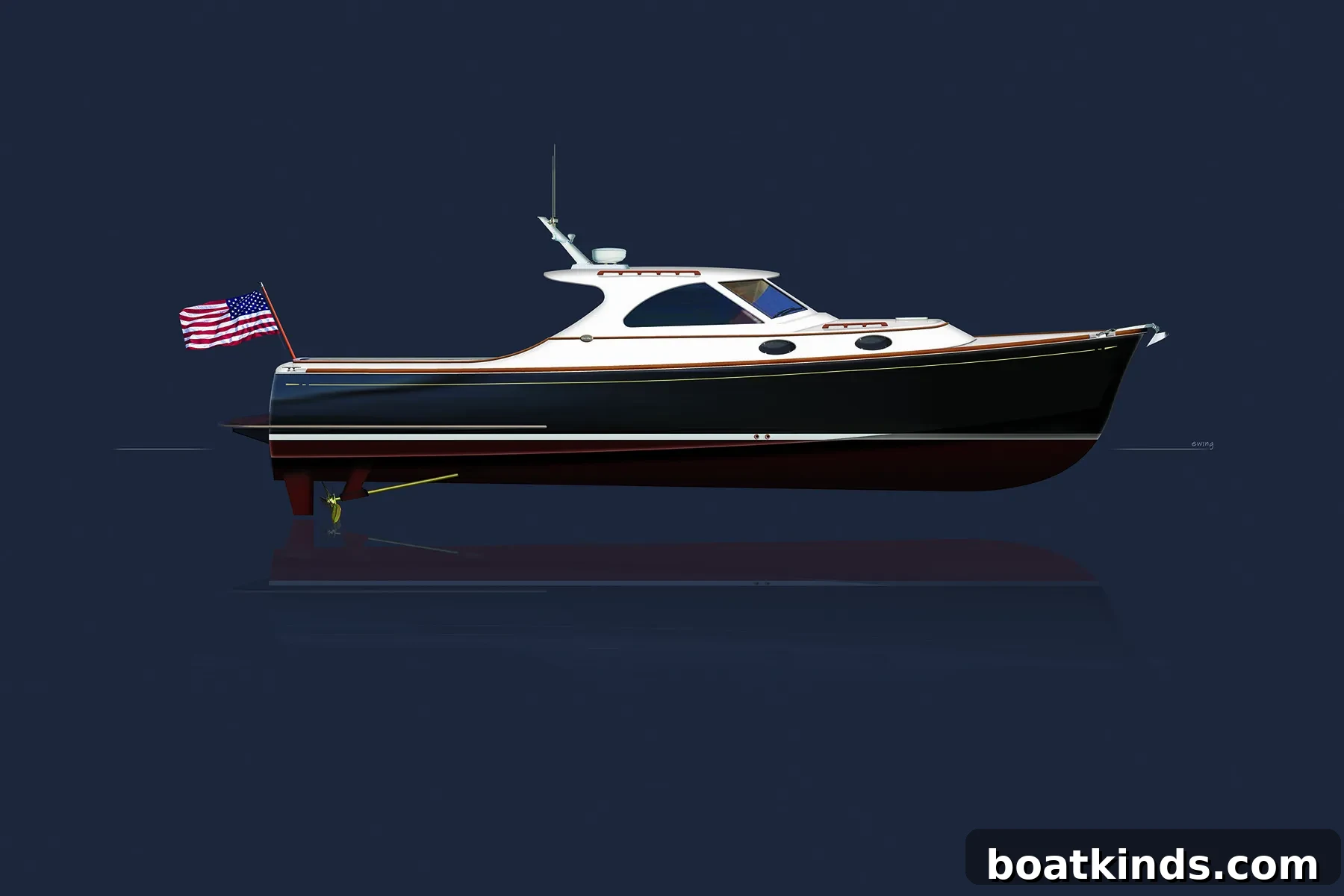
When two experienced boatbuilders set out to produce a limited-run, semi‑custom yacht that combined advanced construction techniques with elegant styling, the result was the San Juan 38. Founded in Anacortes, Washington, by Don Campbell and Randy McCurdy—who had honed their skills together at Admiral Marine—San Juan Yachts introduced the San Juan 38 in 2000 as a yacht that aimed to deliver superior performance, light yet robust structure, and finish quality approaching true custom craftmanship.
Design and Naval Architecture
Naval architect Greg Marshall of Victoria, British Columbia, penned the lines of the San Juan 38. Marshall departed from the more traditional lobster‑boat deckhouse aesthetic in favor of flowing, softened shapes: a springy sheerline, a rounded deckhouse and a hull form that reads as both purposeful and refined. The hull is a modified‑V with a modestly angled stem, a rounded forefoot transitioning into a sharper angle, and full‑length chines that terminate in a slightly convex transom—features that contribute to predictable handling and a visually balanced profile.
Advanced Composite Construction
The San Juan 38 was built using resin‑infused composite construction, a manufacturing approach that produces a consistent, high strength‑to‑weight laminate by controlling the resin content and fiber consolidation. The structure combines E‑glass for reliable strength and cost‑effective reinforcement, Kevlar for added impact resistance, and a Corecell foam core to increase stiffness and thermal insulation without unnecessary weight. Vinylester resins were used to enhance resistance to water ingress and reduce the risk of osmotic blistering. Together these materials give the San Juan 38 a lightweight yet durable hull and superstructure suited to both performance cruising and demanding day use.
Propulsion and Handling
The first San Juan 38s were offered with twin 350‑hp diesel engines. Later models were available with optional 440‑hp Yanmar 6LY‑STE diesels turning four‑blade Nibral props, allowing the boat to reach a reported top speed of about 39 knots. Owners praised the yacht’s confident handling, attributing crisp helm response to the Marol hydraulic steering system and responsive throttle control with MicroCommander electronic controls. Precise low‑speed maneuvers and improved docking control were enhanced by an optional Side‑Power bow thruster, a practical feature for a boat of this size.
Layout and Onboard Comfort
The San Juan 38’s pilothouse features a semi‑enclosed hardtop that shelters the helm while preserving sightlines. The helm and passenger seating are raised to provide nearly 360‑degree visibility; a starboard helm chair and a port dinette with banquette seating for four make the pilothouse both a navigational station and a social space. In the cockpit, pull‑up sun lounges allow easy access to the engine compartment, and a wide transom bench adds additional seating and social room for guests. Teak trim and joinery are used throughout the cockpit, pilothouse and accommodations to create a warm, durable interior finish.
The interior plan is a practical two‑stateroom layout with a functional galley and comfortable living spaces, reflecting the semi‑custom intent to balance liveability with performance. Attention to fit and finish was a hallmark of the design, aiming to provide an experience closer to a bespoke yacht than a production runabout.
Production and Legacy
San Juan Yachts produced the 38 for roughly a decade. During its production run the model found an audience among discerning owners who wanted a limited‑production craft built with modern composites and high‑quality systems. Although the San Juan 38 is now retired, the San Juan 40 was introduced as a larger evolution of the same design philosophy for owners seeking an updated version of the yacht that helped establish the brand’s reputation.
This article was originally published in the August 2022 issue.