
Chapman Piloting & Seamanship, 70th Edition — Edited by John Wooldridge
Soundings contributor John Wooldridge. Courtesy Hearst Home Books
In 1983, John Wooldridge was working as an editor at Motor Boating magazine when Executive Editor Dan Fales asked him to help deliver a large powerboat from Annapolis, Maryland, to Miami. Wooldridge admits he hesitated—he’d never made that passage and didn’t want to leave just two people responsible for the trip.
Fales wasn’t worried.
“He said he’d send me some background reading for the trip,” Wooldridge recalls.
A few days later a copy of Chapman Piloting & Seamanship thudded onto his desk.
“I had used office copies for years, but here was my own personal book,” Wooldridge says. “Dan, who had been a longtime contributor to Chapman, marked the chapters he thought I should review. Like most boaters, I read well beyond what he flagged. Everything I’d studied came alive on that delivery—from changes in buoyage where rivers meet the Intracoastal Waterway, to the quirks of passing tugs and their tows.”
More than forty years later, Wooldridge—now a regular writer for Soundings—has come full circle. He served as editor of the 70th edition of Chapman Piloting & Seamanship, which is being released this October.
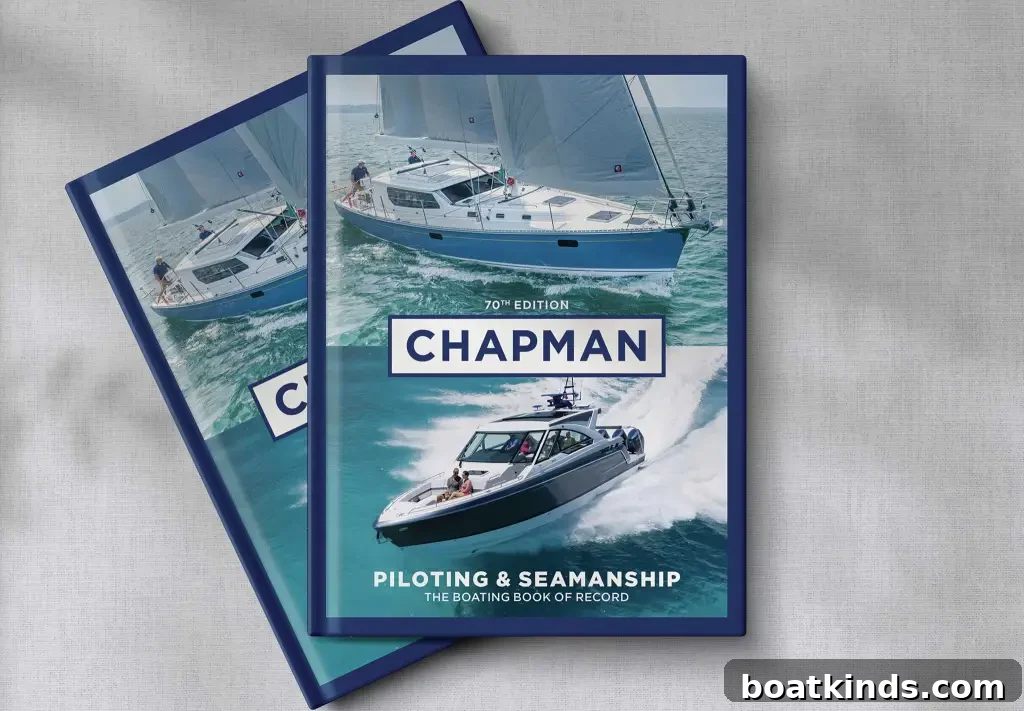
Few books have influenced recreational boating as profoundly as Chapman. First published in 1917 by Charles Frederic Chapman—naval architect, illustrator and longtime editor of Motor Boating—the manual was created to give new boat owners a practical, comprehensive reference for operating their boats safely. As boating grew through the early 20th century, Chapman’s clear, practical guidance quickly made the book a standard reference often called “the bible of boating.”
Chapman was also a founding member of the United States Power Squadrons, now known as America’s Boating Club, an organization devoted to improving safety through education. That spirit—teaching boaters to be safer, more competent mariners—remains the core mission of both the organization and the book more than a century later.
Over seven decades the manual has evolved with the boats and technologies it addresses. Every edition updates navigation, propulsion, communications, electronics and safety information while preserving the timeless foundations of seamanship. The 70th edition continues that practice, balancing traditional topics with expanded material on modern systems that matter to today’s owners and captains.
“No category has changed faster than electronics,” Wooldridge notes. Equipment that once was confined to top-tier installations is now more widely available. From integrated navigation features to satellite communication options that keep crews connected far offshore, the newer systems are more capable and more accessible. The Communications chapter includes a substantial technology update to reflect those changes.
Marine propulsion is another area of rapid advancement since the 69th edition in 2021. “Smarter microprocessors and integrated control systems now optimize fuel use and emissions over a broader range of outboard and inboard powertrains,” Wooldridge says. He points out that many manufacturers are adding digital interfaces and automated stabilization features that reduce pitch, roll and yaw, improving comfort as well as handling. Those developments are addressed in the revised Marine Propulsion chapter.
The new edition also reflects the latest guidance from the American Boat & Yacht Council (ABYC), whose standards influence design, construction and maintenance practices that make modern boats safer and more reliable. Incorporating those standards helps readers understand current best practices for systems and equipment.
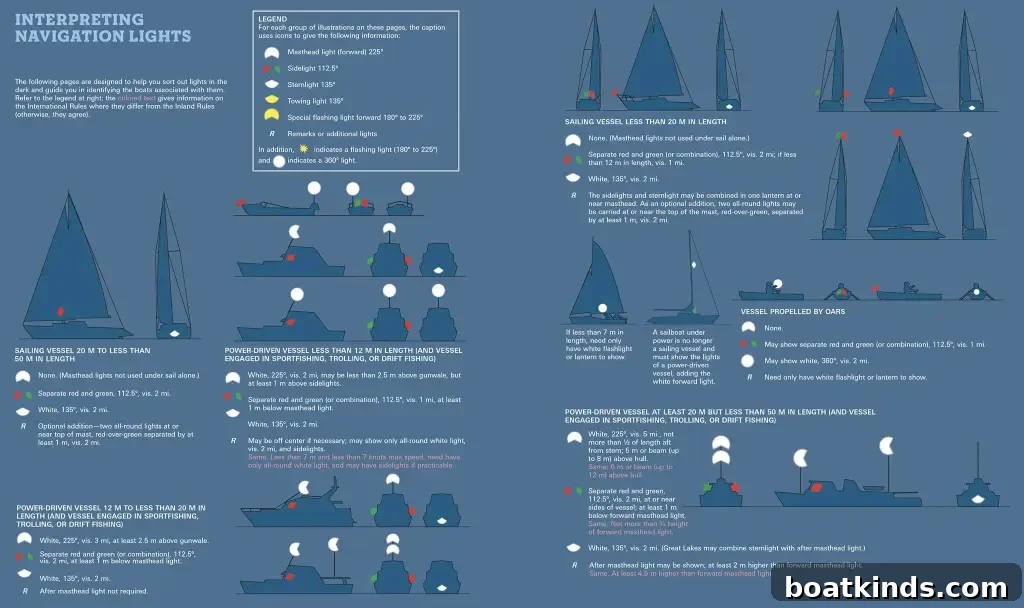
Despite the technological advances, the enduring value of Chapman remains its emphasis on fundamentals. The manual still provides clear, step-by-step instruction on essential skills—knot tying, anchoring, piloting, night navigation, heavy-weather handling and the international and inland Rules of the Road. More than 1,500 photographs, charts and illustrations support the text, and a 4,200-entry index makes it straightforward to find the information needed whether planning a cruise or troubleshooting a problem underway.
“Updating this 70th edition was not a one-person effort,” Wooldridge emphasizes. “I worked with experienced boating writers and technical specialists throughout the process. Their expertise helped ensure the material continues to serve boaters as reliably as it has since 1917.”
For Wooldridge the project has personal meaning. “Over the years Dan and I made other deliveries together, and I can’t repay him for putting that copy of Chapman on my desk,” he says. “He sparked my curiosity and sense of adventure, and that book unlocked the information that made many of those trips possible.”
This article originally appeared in the September 2026 issue.