
Photography by Andrew Chin
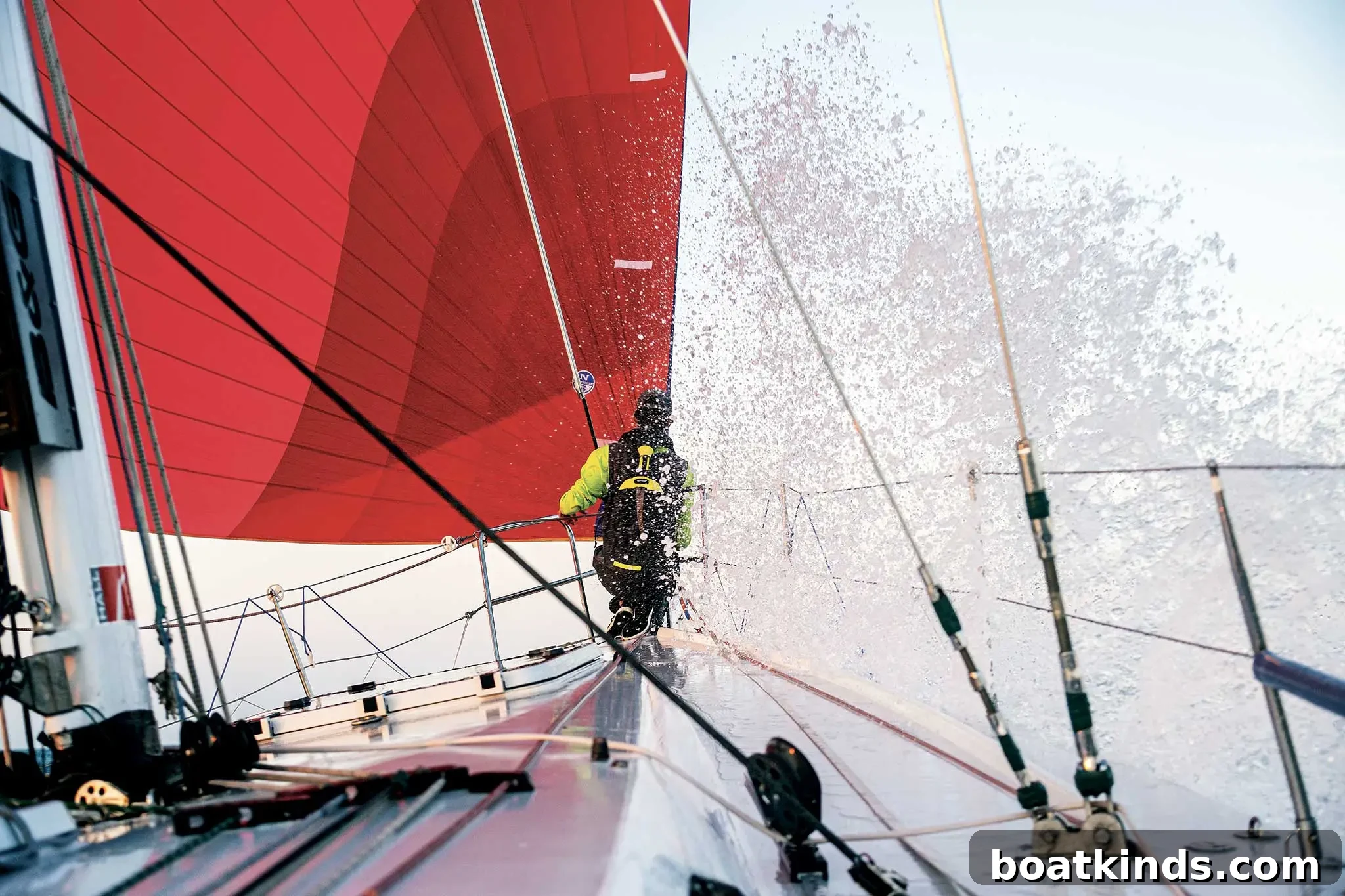
The sun hadn’t yet set on the first day of the Marblehead to Halifax Race when Crazy Horse had already covered 90 miles. It was a downwind sled run across the Gulf of Maine: the Baltic 50 was surfing at double-digit speeds under a red A3 spinnaker, keeping pace with modern race sleds—a Reichel-Pugh 66, a Kernan 47, a Class40 and a Judel/Vrolijk 66. Kites were snapping around them and other boats were rounding up, but the CBC youth crew stayed committed to sail power, trimming each wave to hold the bow eastward at 16 knots and then 17. On another surf, the boat hit 20 knots, and the friendly competition on deck shifted to who could reach the next top speed.
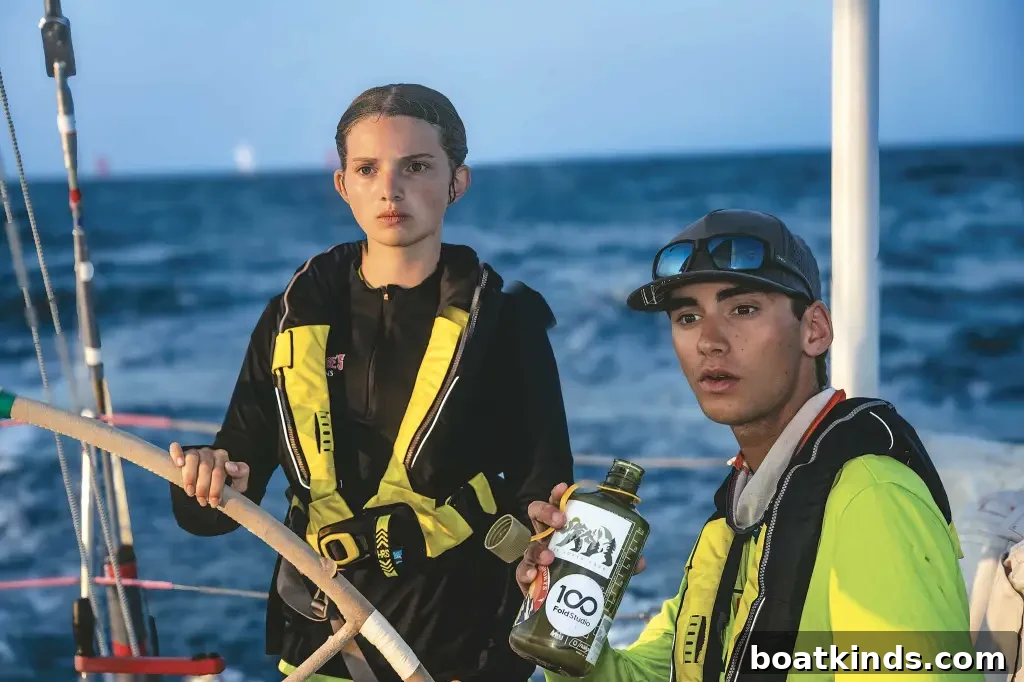
This was the 2025 Marblehead to Halifax Race, a 363-mile offshore test along the Nova Scotia coast. Crazy Horse was crewed by the Community Boating Center of New Bedford’s youth offshore team. For most of the crew—coaches and one experienced sailor excluded—it was their farthest trip offshore to date, and it doubled as both a race and a hands-on training ground for offshore sailing skills.
When the overnight watch changed, boots splashed onto the cabin sole and fifty to sixty gallons of water sloshed through the boat. The off-watch quickly took charge: cushions were tossed, hatches opened, and systems checked. As Crazy Horse surfed another wave and the helm came over to keep her tracking, water began running forward from the steering compartment. The stuffing box at the rudder post was leaking like a natural spring—slow, but persistent. It was manageable; the crew pumped and sponged, and the boat pressed on slightly drier, the minor emergency handled while the fun continued on deck.
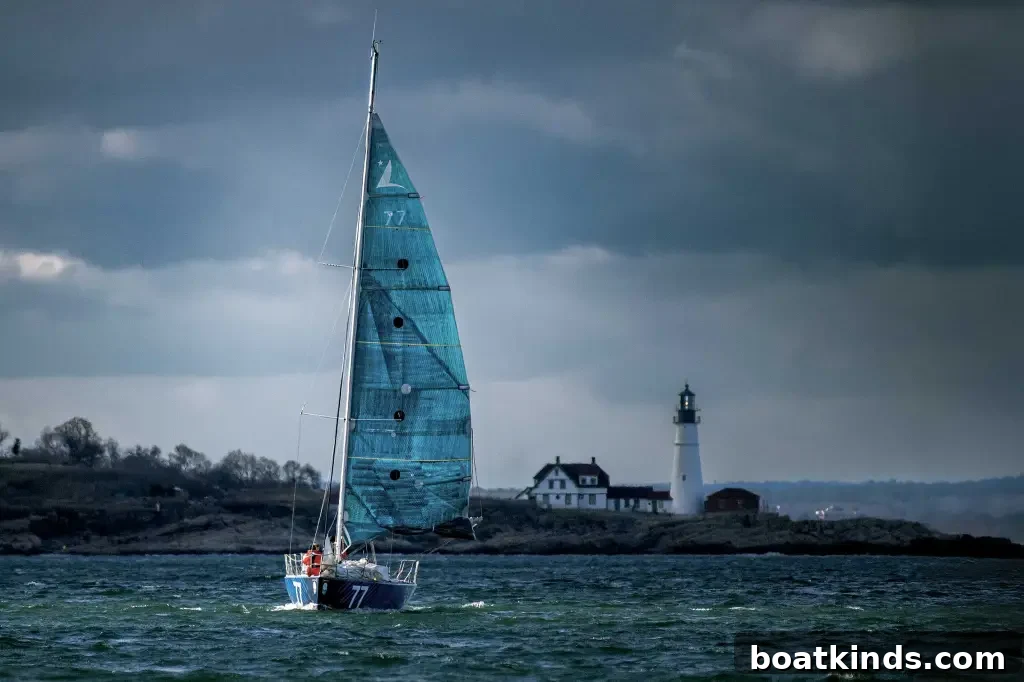
At dawn another problem appeared. “Something looked weird at the front of the boat,” an experienced crew member remembered. The bobstay had gone loose; with a bumpy sea and a kite up, the sprit was pounding as the spinnaker loaded and unloaded. If unaddressed, the sprit risked failing. The team improvised: a spare spinnaker sheet was secured to an eye near the bow knuckle, a crew member dangled over the stem and was soaked by cold Canadian water while fitting the line through the sprit and back to a winch via the jib cars. The makeshift, adjustable bobstay held, and Crazy Horse was ready for many more hours of downwind sailing.
Fog rolled in as the team rounded Nova Scotia’s southern tip, and the race became a test of tactics and watchstanding. They traded the A3 for a heavy runner and switched into VMG-downwind mode, carefully timing jibes and threading past container ships as they worked north and east toward Halifax.
After 39 hours, 21 minutes and 39 seconds of offshore sailing, the CBC youth team crossed the finish line outside Halifax—and won the ORR2 class by a mere 34 seconds over the Sparkman & Stephens-designed Black Watch. The margin was so tight that many crew members learned of the victory only when they were called to the awards stage; one teammate had to sneak a peek at the race tracker by accessing the onboard Starlink to confirm their lead.
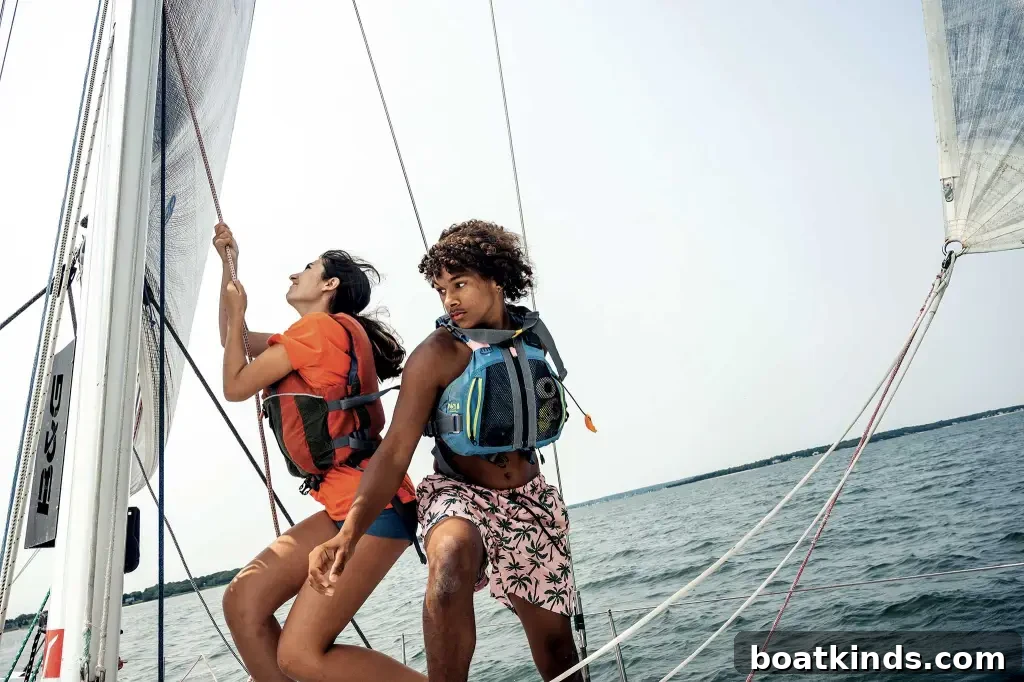
Winning, however, was never the team’s primary aim. The Community Boating Center’s youth offshore program emphasizes teamwork, leadership, seamanship and problem-solving. In four seasons the program has logged more than 7,500 nautical miles and engaged 150 participants. Crazy Horse was donated in 2025, but much of the training and racing has happened aboard two Figaro IIs—33-foot Beneteau one-designs used for short-handed offshore racing and easily adapted for fully crewed youth instruction. The CBC is committed to inclusion, offering affordable and subsidized programs so cost isn’t a barrier to participation.
Local races have played a vital role in building experience. In the Ida Lewis Distance Race, for example, a careful strategy won the day: after a slow morning and a calm north of Block Island, the crew conserved energy with breakfast and hot drinks, then worked a developing sea breeze alongshore toward Castle Hill. By protecting the shore side and choosing the right lanes, they passed four boats and scored the best finish a CBC Figaro team has achieved in that event. Two weeks later in the Vineyard Race, a tide-centered decision early on proved advantageous when the forecast northerly boosted the crew’s wind while many inshore competitors were left in lighter air. The team leveraged the stronger breeze to regain the lead and pushed toward the finish at dusk.
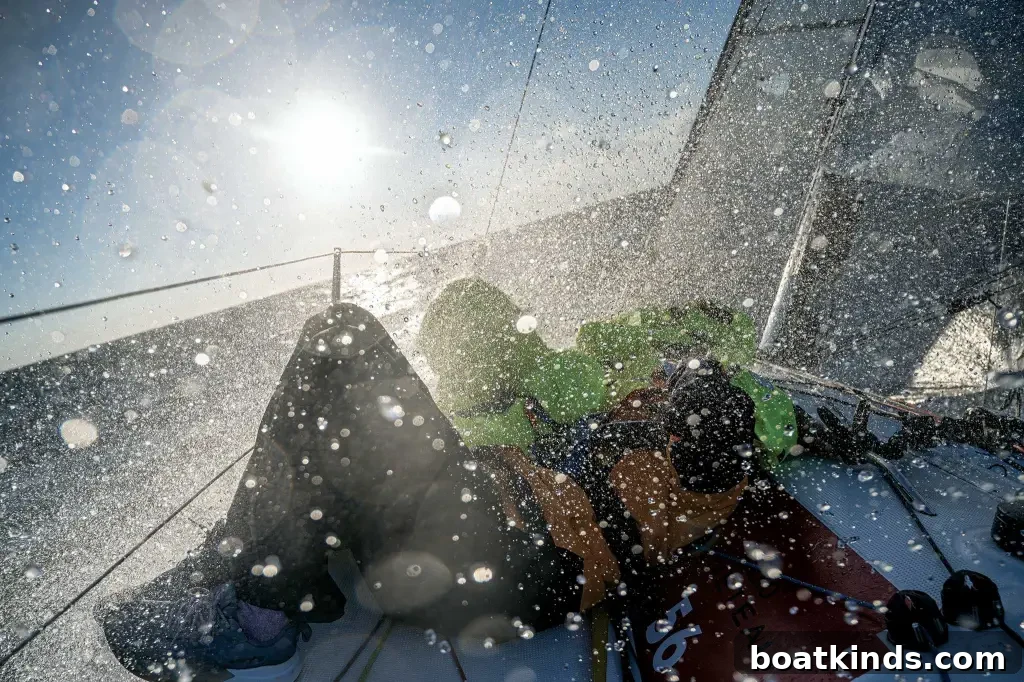
At the time of reporting the Youth Offshore Team was preparing for the 2026 Newport-Bermuda Race, set to start June 19. They were focused on the practical challenges ahead: the Gulf Stream’s currents, higher temperatures near Bermuda and the endurance required for days at sea. Preparations include a complete overhaul of Crazy Horse’s freshwater system, rudder bearing service, sourcing fittings for older hardware, mandatory safety-at-sea training and on-water practice as New England waters warm. Fundraising is a shared responsibility, coordinated by CBC leadership to ensure the team is properly trained and equipped.
Beyond the logistics, the program gives young sailors a chance to disconnect from screens and connect with people and the elements. The shared hardships and small triumphs—serving a tired spinnaker trimmer a bite of food between surfing waves, or standing a soggy watch at dawn—forge camaraderie. Participants come to the program through many paths: a skateboard-building class that led to boatbuilding, school partnerships that introduced students to sailing, siblings who followed older family members—this diversity strengthens the team and mirrors the multidisciplinary nature of offshore racing.
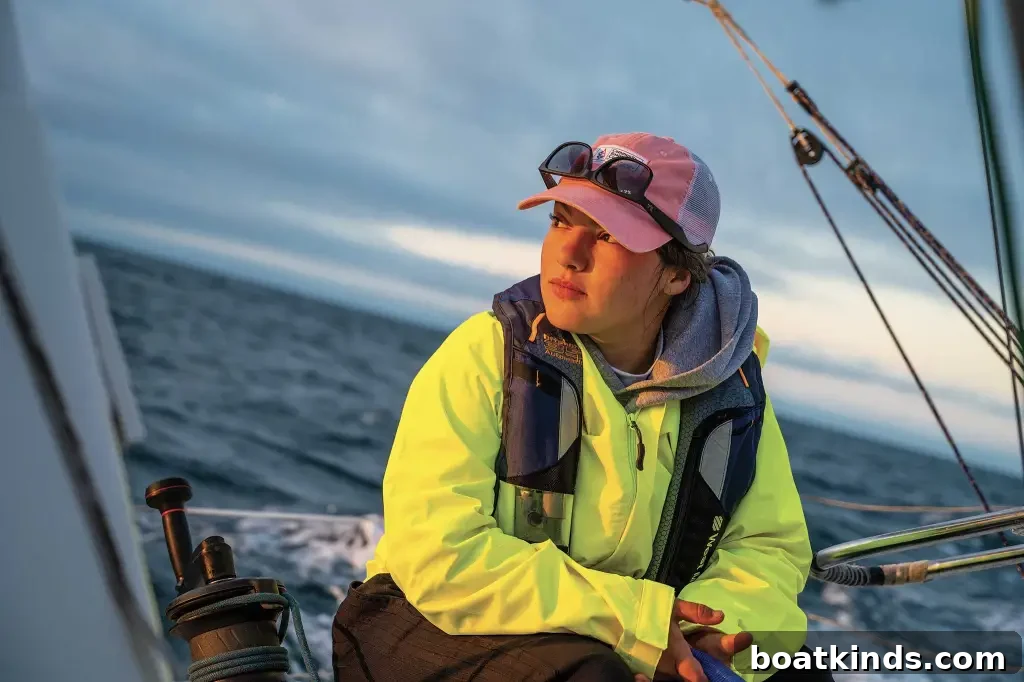
the sunset.
Sailing teaches durable, practical skills. Reading wind shifts builds pattern recognition; calling a layline practices consequence-based decision-making; repairing rigging and maintaining systems develops hands-on competence. The ocean is an honest teacher: it doesn’t care about background or social status, and it offers second chances only to those who prepare. In an age that often shields young people from friction, sailing’s immediate feedback and team-based problem solving are uniquely valuable.
Community support is essential. From mentors and volunteer boat maintenance to financial donors, the village behind the Community Boating Center makes the program possible. This isn’t sentimentality—it’s strategy for growing the sport. If sailing is to thrive, harbors must stay full of curious, capable young sailors. Organizations like CBC lower barriers to access and invite youth to treat the water not just as a backdrop, but as a proving ground for skills that translate on and off the boat.
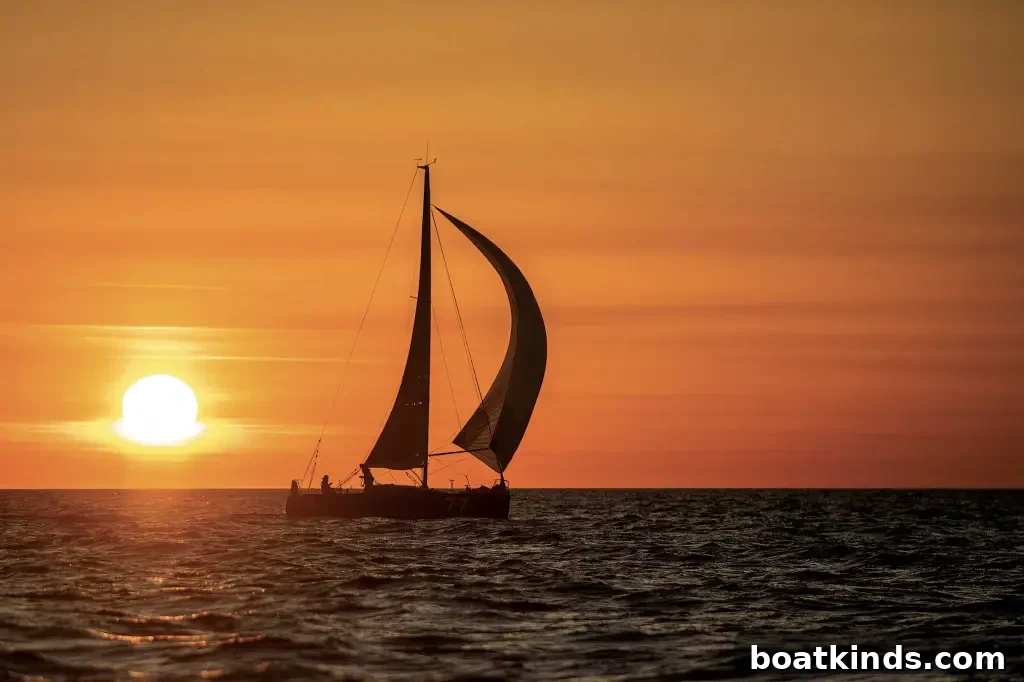
The CBC’s offshore team is still young, but its impact is clear. By combining real offshore experience, inclusive access and community involvement, the program is helping shape the future of sailing. The race outcomes are memorable, but the larger prize is the confidence, leadership and lifelong skills these young sailors bring back ashore.
This article was originally published in the August 2026 issue.