
The waters of the U.S. Northeast have long nurtured some of the country’s most cherished maritime traditions—from varnished wooden runabouts and hardworking lobster boats to storied waterfronts and shipyards. In this photo essay, award-winning photographer Onne van der Wal of Jamestown, Rhode Island, focuses on the boats, builders, and coastal scenes that give this region its unmistakable character. His black-and-white images invite close attention to form, texture, light, and workmanship: the elegant sheer of a classic hull, the worn grain of a dock line, the quiet geometry of rigging. Captured with a Leica Q3 and its 60-megapixel, full-frame sensor, these photographs render subtle tonal contrasts and delicate detail that amplify the quiet power of monochrome imagery.
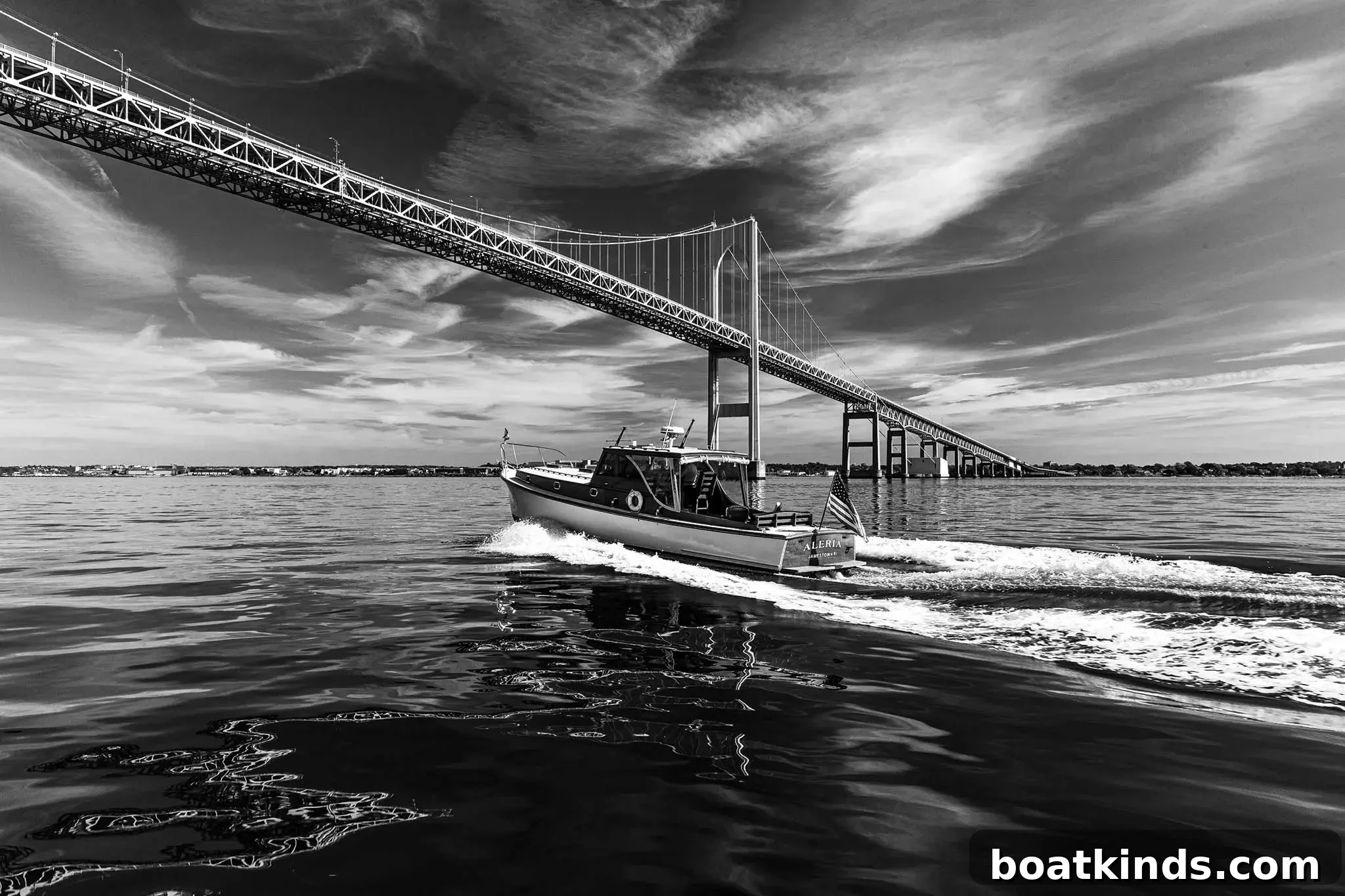
Opening Spread: Aleria is a 42-foot wooden motorboat built by Bunker & Ellis in Southwest Harbor, Maine, in 1958. Often described as a “lobster yacht,” she exemplifies the elegant, seaworthy design vocabulary associated with the Downeast Maine aesthetic. Built with white oak frames and cedar planking and finished with a mahogany transom, Aleria received a major restoration at Johansen Boat Works in Rockland, Maine, in 2010. She is powered by a pair of 220-hp Yanmar diesel engines. In van der Wal’s image she passes beneath the Newport Bridge on Narragansett Bay, returning to her Jamestown homeport after a weeklong cruise of southern New England, the hull’s lines and reflections emphasized by the subdued tonal range of the photograph.
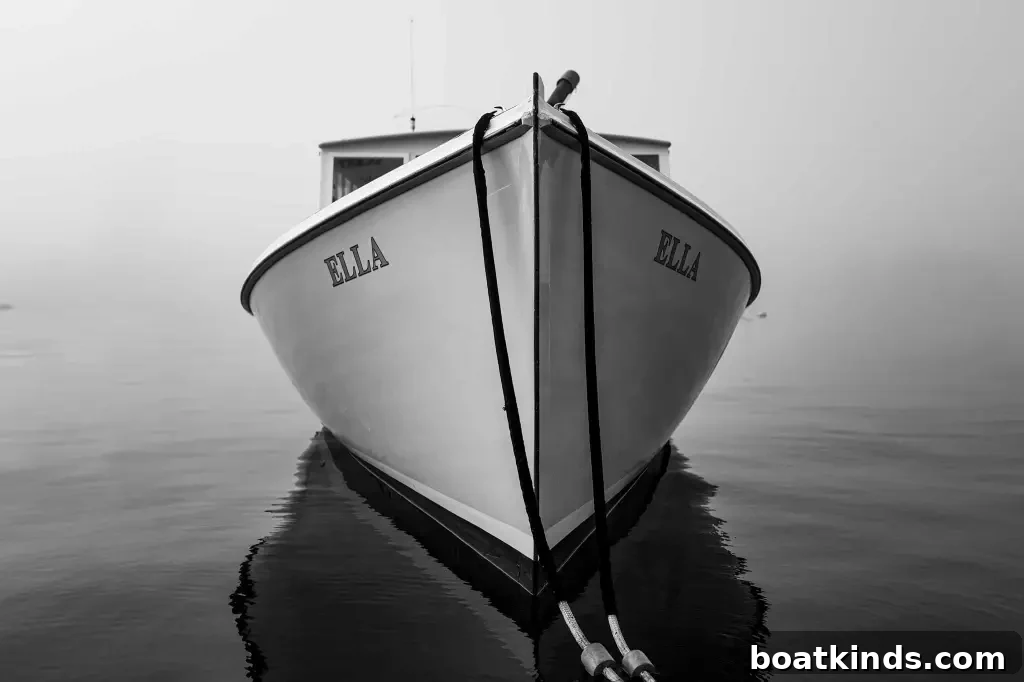
The 37-foot lobster boat Ella, built in Maine in 1983 and designed by Osmond Beal, rests on her mooring off Ida Lewis Yacht Club in Newport, Rhode Island. Van der Wal discovered her on a sunrise dinghy ride around Newport Harbor, where a thin veil of fog softened the morning light. Her deep-V hull, a hallmark of traditional lobster-boat design, is meant to cut through steep Atlantic chop and plane efficiently while fishermen hauled traps—prioritizing seakeeping and stability over outright speed. The Beal family of Beals Island occupies a foundational place in the region’s boatbuilding history; vessels bearing that name are widely regarded as collector-quality working boats, often built with local timbers and traditional techniques that emphasize durability and seaworthiness.
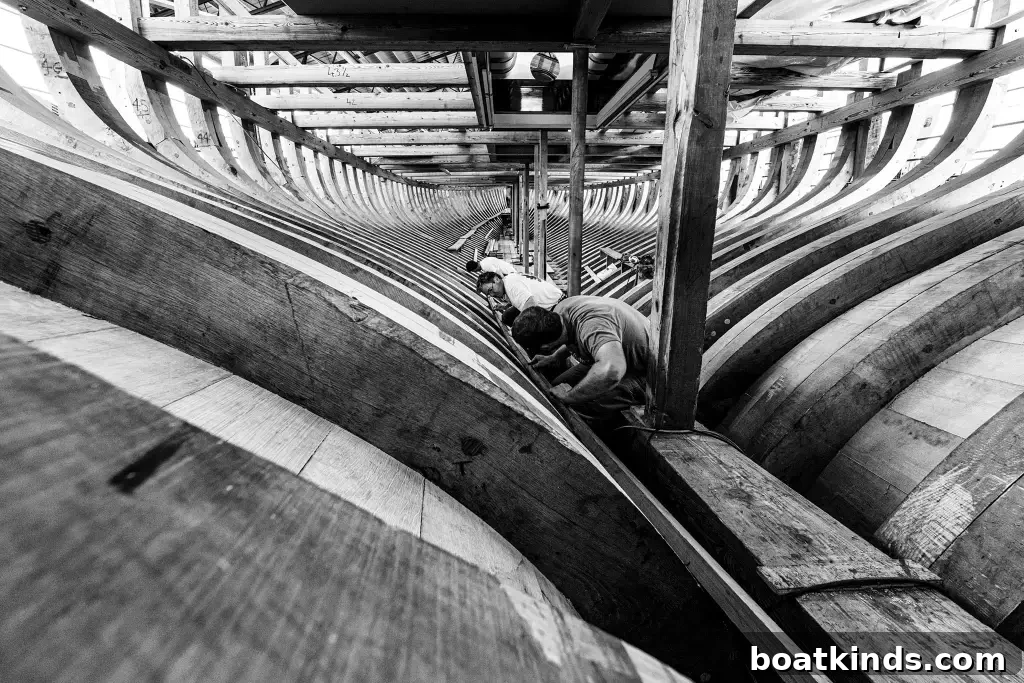
In a Newport shipyard scene, Eric Thesen stands at the center as lead shipwright during the restoration of Coronet. He checks the fairness of massive frames on this 133-foot sloop at the International Yacht Restoration School. Built in 1885 for oil tycoon Rufus T. Bush, Coronet is one of the oldest and largest vessels of its kind and among the last grand sailing yachts of the 19th century. After decades of changing hands and periods of neglect, Coronet underwent an extensive restoration between 2010 and 2022 before being transferred to Mystic Seaport in Connecticut to complete the final stages of work. Van der Wal’s photograph captures the hands-on craft and scale involved in preserving such a storied vessel.
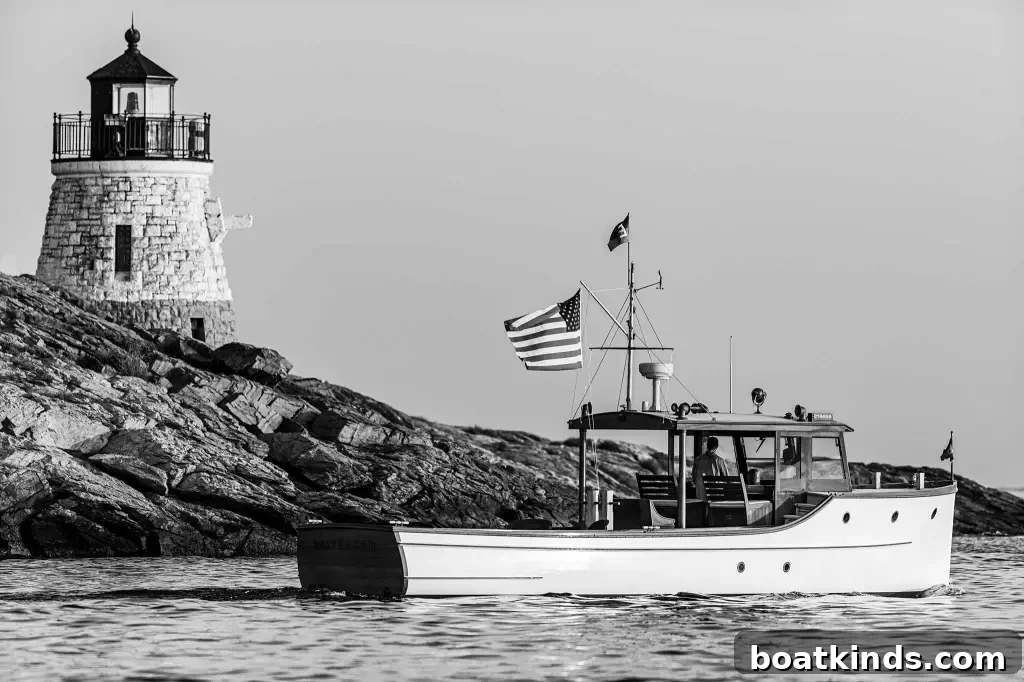
The 42-foot wooden motorboat Bystander returned to the water after a comprehensive restoration completed around 2009. The project, led by Elizabeth Meyer of Newport-based J Class Management in collaboration with Narragansett shipwrights, began in 2002 and spanned nearly eight years. Originally built in 1929 as a tender for the J Class yachts that competed in America’s Cup racing during the 1930s, Bystander was designed by W. Starling Burgess. The boat later entered private ownership when Harold Vanderbilt purchased her from a syndicate in 1935. For the restoration, Levick glass plate negatives from the Mariners’ Museum and van der Wal’s own reference photographs were used to return the vessel to its original plans and construction, honoring both archival source material and traditional craftsmanship.
These photographs collectively celebrate the craftsmanship, history, and living traditions of the Northeast’s maritime culture—wooden boatbuilding, careful restorations, and the coastal landscapes that frame them. Van der Wal’s images highlight how light, texture, and proportion reveal the soul of each vessel, whether a working lobster boat, a restored classic motorboat, or a monumental 19th-century yacht undergoing renewal.
This article was originally published in the August 2026 issue.